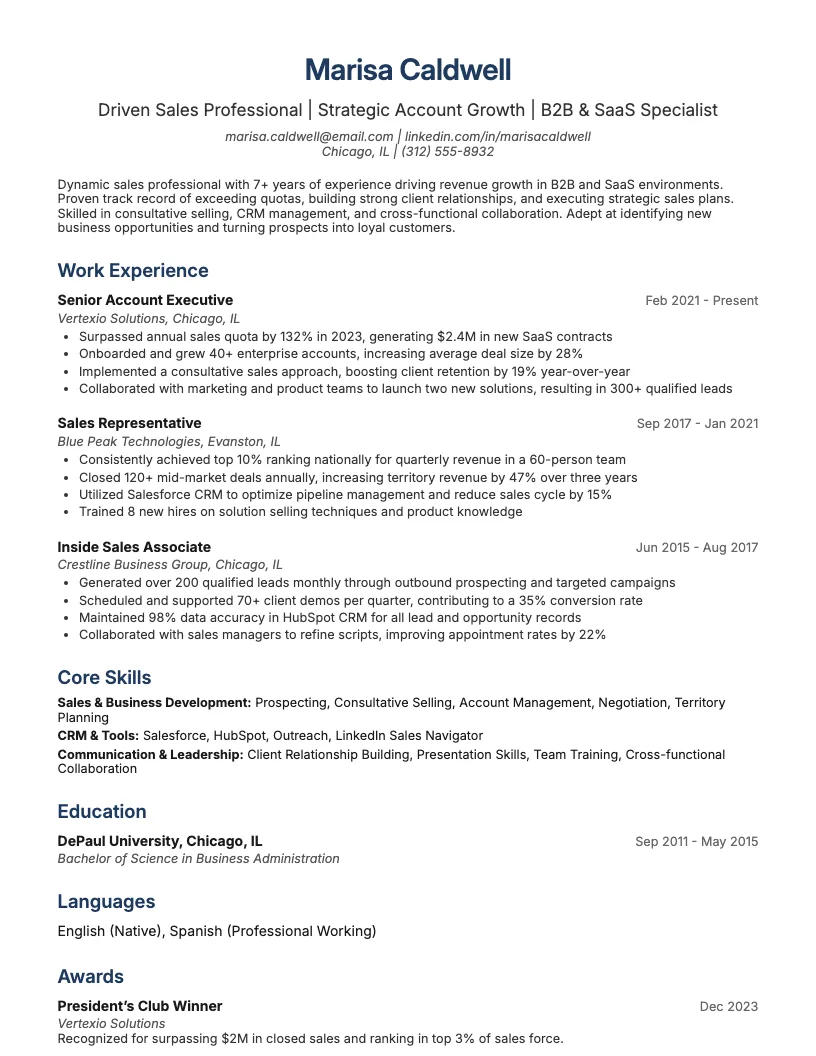
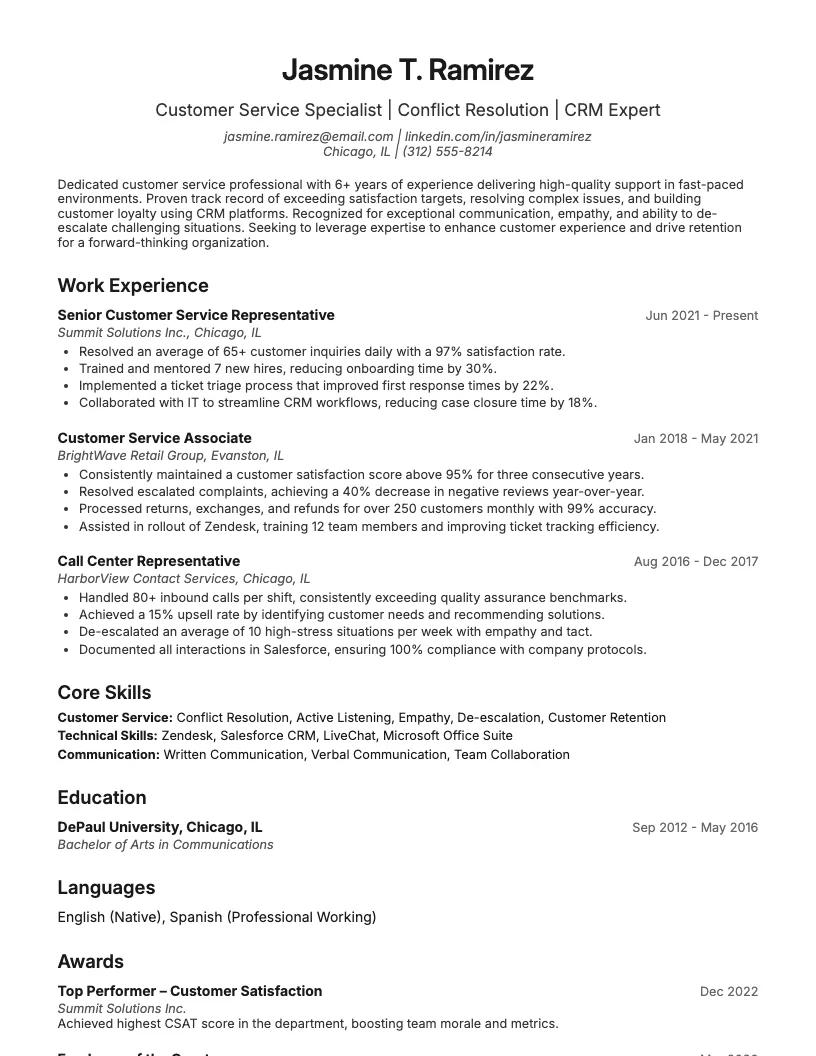
Web Developer Resume Example
See full guide on Web Developer resumes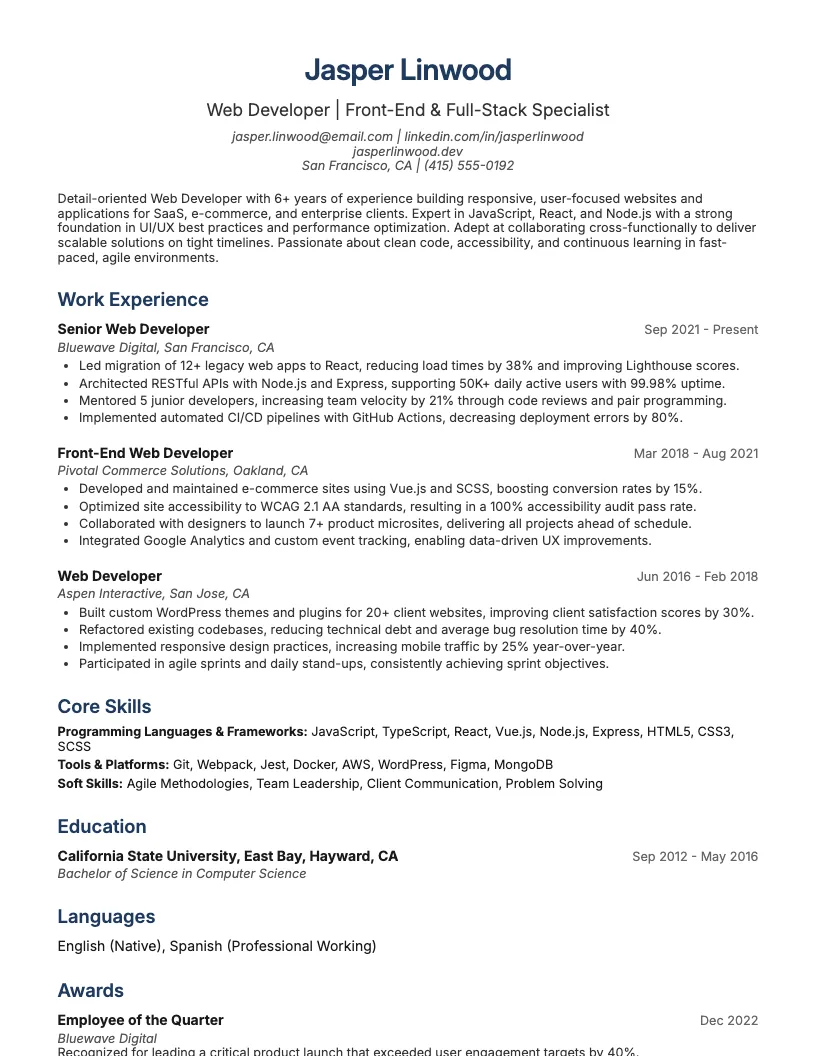 Click to enlarge
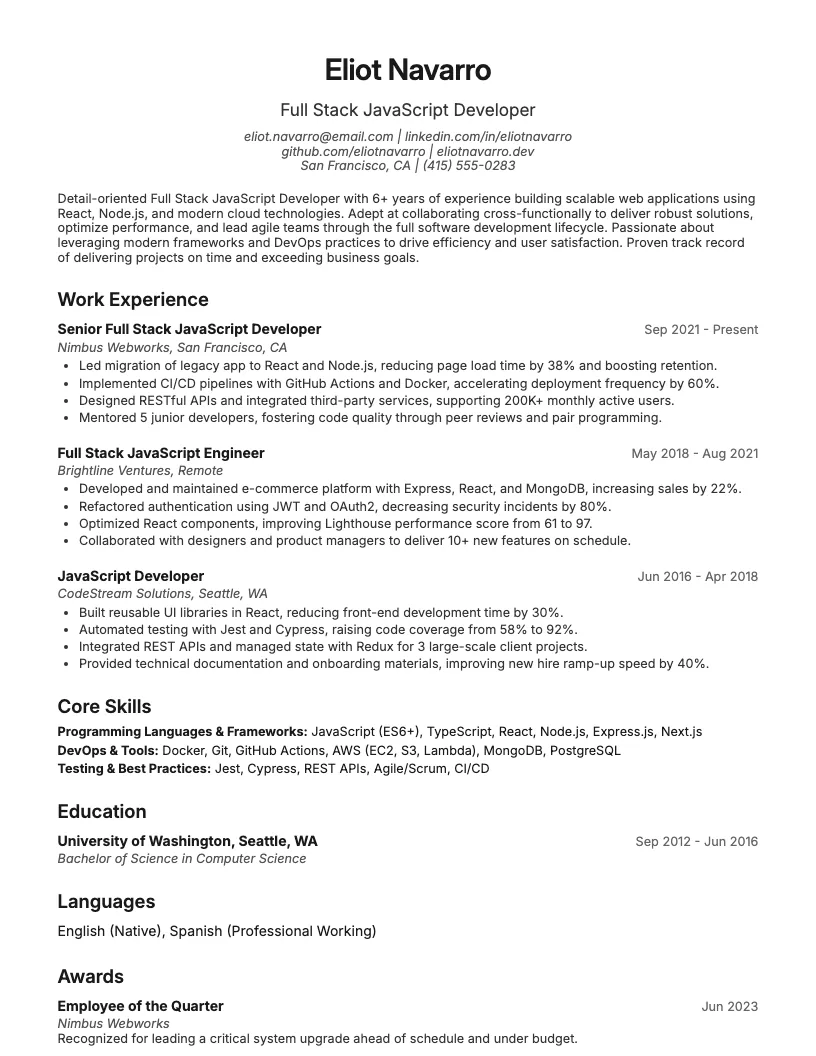 Click to preview

Get inspired by 62+ professional Full Stack Javascript Developer resume examples, each written by career experts and optimized to pass ATS scans. Pick a proven template, tailor it to your role, and download a polished resume in minutes.
Pick the specialization closest to your target role and start from a proven resume example.
If you want to land a full stack Javascript role, your resume matters a lot. Recruiters skim resumes in under 7 seconds, so yours needs to stand out fast.
I’ve seen that a solid resume highlights your experience with both front-end and back-end Javascript. You want to show you know frameworks like React, Node.js, and databases, too.
I’ll walk through a sample resume and break down what makes a great one for this field. You’ll see what skills and keywords help you get noticed.
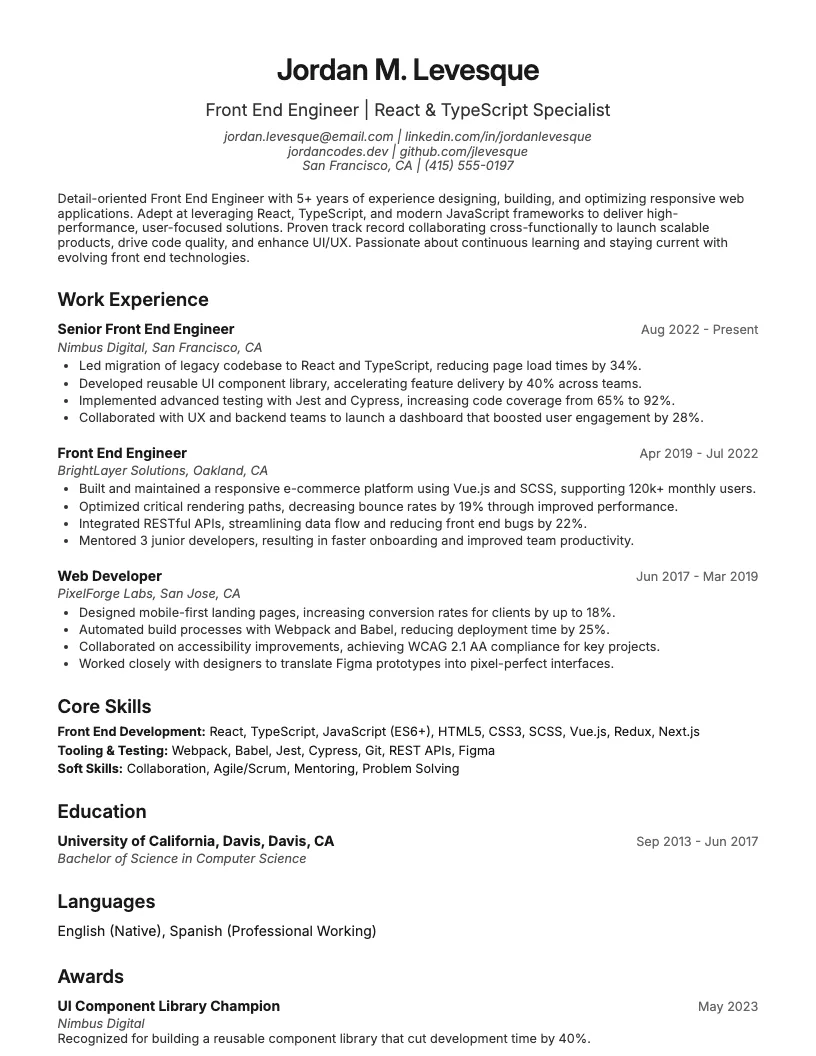
Here’s a look at a full stack JavaScript developer resume that actually gets noticed. I focus on clarity, layout, and real skills-no fluff, just what matters.
You’ll see how I highlight both front-end and back-end experience, with numbers to show real impact. This helps recruiters spot core strengths in less than 10 seconds.
It’s easy to scan, with bold sections and clear job titles. I keep tech stacks, project results, and certifications right up front, so nothing gets buried.
You want a resume that shows your experience with both front-end and back-end tech. List frameworks like React, Node.js, and databases such as MongoDB or PostgreSQL.
I always highlight impact. Use numbers-like reduced load time by 40% or handled 10,000+ concurrent users. This helps recruiters see results, not just duties.
Keep it clean and skimmable. Use bullet points, clear job titles, and bold keywords. Show projects, not just job titles. Great resumes prove you’re hands-on and current in the stack.
Writing a full stack JavaScript developer resume means showing off your coding skills and practical project experience. Recruiters scan resumes quickly, so your layout matters a lot.
I focus on highlighting both front-end and back-end projects. You want to make your impact clear right up front.
Choosing the right format and template can help your resume stand out. It also makes it easier for hiring managers to find your best skills fast.
You want your resume to look clean and organized. Stick to one or two professional fonts and keep your margins at least 0.5 inches for readability.
I always recommend using bullet points to highlight key achievements. This helps recruiters scan your experience faster-most only spend about 6-7 seconds per resume.
Keep everything under two pages. Full stack JavaScript roles call for concise summaries, not super detailed work histories. Prioritize recent and relevant projects or skills.
I always start by picking a template that fits the tech industry-simple, modern, and clean. Flashy designs can distract, but a clear layout keeps your skills front and center.
You want a template that highlights both front-end and back-end experience. Prioritize sections for technical skills and recent projects-these matter most for full stack JavaScript roles.
Some templates offer customization for GitHub links, portfolios, or certifications. This helps you show off your real-world work and open-source contributions, which 60% of employers value.

A solid Full Stack Javascript Developer resume covers more than just work history. You need to show off your coding skills, projects, and achievements clearly.
I always make sure my resume highlights my technical strengths and relevant experience. Recruiters spend less than 8 seconds scanning each resume, so clarity is key.
You want each section to show your value. That means focusing on your summary, skills, work experience, education, and certifications or projects.
Your professional summary is the first thing recruiters see. I use this section to highlight my JavaScript expertise and years of hands-on experience in full stack development.
You want to keep it short-think three to four lines. Focus on what makes you unique: your years in the field, the frameworks you use, and your strongest impact.
There are over 70% of recruiters who spend less than a minute on each resume. This section helps you stand out fast and keeps them reading.
I always start with core technical skills on my resume-things like JavaScript (ES6+), Node.js, React, Express, and MongoDB. These show I really know full stack development.
You should highlight any frameworks, libraries, or tools you use daily. Tools like Webpack, Jest, Docker, or TypeScript make a difference, especially if you’ve used them on projects.
Don’t forget to mention version control like Git, and any experience with REST APIs or GraphQL. This helps recruiters quickly see your hands-on abilities.
I always start this section by listing my most recent JavaScript roles first, and I make sure my application includes a cover letter to highlight my fit. This gives recruiters a quick sense of my current experience and impact.
You should use bullet points for each job. Focus on real results-like reducing page load times by 40% or leading a team of 5 developers. Numbers help your work stand out.
There are lots of ways to showcase both front-end and back-end projects. This helps hiring managers see your full-stack skills in action. Keep each description clear and concise.
I always highlight my highest degree first, like a Bachelor’s in Computer Science or a coding bootcamp certificate. This shows I have the technical foundation employers look for.
You want to include your graduation year, school name, and any coursework related to JavaScript or web development. If your GPA is 3.5 or higher, add that too—and consider attaching a cover letter to showcase your motivation.
There are lots of ways to stand out. Listing relevant online courses, workshops, or study abroad experiences gives your background a modern edge. This helps hiring managers see your drive.
I add relevant certifications like AWS Certified Developer or MongoDB Certified Developer. These show I stay updated and can handle new tech.
You should also list personal or open-source projects. This proves you can apply your skills outside the workplace-especially if you’ve shipped features or solved real problems.
There are tons of developers, so showing off live apps or GitHub repos with over 100 stars can make you stand out. Employers love seeing what you actually build.
If you want to stand out as a full stack Javascript developer, you need a mix of technical and soft skills. I see employers look for both on almost every job description.
It’s not just about writing code. Companies expect you to handle front-end, back-end, and deployment tasks. You also need strong communication, problem-solving, and teamwork abilities.
Listing these skills helps you match what hiring managers want. Let’s break down the top areas to focus on so your resume gets noticed.
Front-end skills always stand out on a Full Stack Javascript Developer resume. I focus on React.js, Angular, and Vue.js-these frameworks power 85% of modern web apps.
You should highlight your experience with HTML5, CSS3, and ES6+ JavaScript. This shows you’re comfortable building clean, responsive user interfaces that work across devices.
Don’t forget to mention tools like Redux, Webpack, and Sass. These technologies speed up development and help you manage complex projects with fewer bugs.
Back-end skills really set you apart as a full stack JavaScript developer. I use Node.js and Express.js to build fast, scalable APIs and server-side logic.
Databases matter too. I work with MongoDB, PostgreSQL, and Redis to store and manage data. You should mention experience with ORMs like Sequelize or Mongoose.
Don’t forget RESTful APIs and GraphQL. Recruiters look for developers who can design and secure endpoints. Show off your authentication and error-handling chops here.
I always list DevOps skills on my resume. Employers love when you automate CI/CD pipelines, manage cloud deployments, and monitor production apps for uptime.
You should name tools like Docker, AWS, or Jenkins you use. Most teams push code to production at least once per day, so these skills really matter.
Highlight ways you streamline deployments and reduce downtime. This shows you care about reliability and speed, not just writing code.
You need more than just technical chops. Communication skills matter-a lot. About 80% of employers say teamwork and clear communication are dealbreakers for dev roles.
I always highlight problem-solving and adaptability. Projects change fast. Showing that I can roll with shifting priorities or jump into new tech stacks helps me stand out.
Don’t forget time management and collaboration. Show you handle sprints, code reviews, and feedback like a pro. That mix of people skills and organization rounds out your resume nicely.
A strong professional summary grabs attention right away. As a full stack JavaScript developer, you want to show your skills and achievements fast.
Recruiters scan resumes in about six seconds. Your summary needs to highlight your experience, core skills, and the value you bring.
I always recommend using numbers and real outcomes. This helps you stand out and makes your summary more credible.
Here are a few realistic professional summary examples tailored for full stack JavaScript developers. Each one highlights key skills, experience, and results in under four sentences.
Passionate Full Stack JavaScript Developer with 5+ years of experience. I build scalable web apps using React, Node.js, and MongoDB. I boost site performance and user engagement by over 30%.
I specialize in RESTful APIs and cloud platforms like AWS. I lead agile teams to deliver projects on time and within budget. You get clean code and fast delivery.
You can highlight your experience with modern frameworks, cross-functional teams, or specific achievements, like reducing bugs by 40% or increasing test coverage to 90%.
Use keywords from the job description. This helps you pass ATS filters and shows you speak the employer’s language. I always look for terms like Node.js, React, or REST APIs.
Highlight your unique impact. If you’ve improved site performance by 30% or delivered projects ahead of schedule, mention it. Numbers stand out and show real results.
Tailor your summary for each job. You can swap out skills, change your focus, or add a new achievement. Personalized summaries grab attention way faster than generic ones.
Hiring managers want to see real impact. I always focus on what I achieved, not just what I did.
When you describe your experience, numbers and details matter. This makes your work easier to understand and more impressive.
Numbers tell your story better than buzzwords. I always highlight metrics-like boosting performance by 40% or reducing bugs by 20%. This gives hiring managers real proof.
You should focus on measurable results-users supported, revenue increased, or projects delivered ahead of schedule. Quantifying your achievements makes your work experience stand out fast.
There are lots of ways to do this. I track things like code coverage, deployment frequency, and response times. This helps me show exactly how I make an impact.
I focus on listing real projects, not just general tasks. I usually mention the tech stack-like Node.js, React, and MongoDB-right in the bullet points.
You can highlight your role in building features, fixing bugs, or leading sprints. If you refactor legacy code or optimize APIs, say so clearly.
There are lots of ways to show responsibility. I like saying, “I led a team of 3 on a chat app project,” or “I own deployment pipelines for two web apps.”
Clear descriptions help recruiters understand what you actually did. This makes your experience more convincing and relatable.
You don’t always need a computer science degree to land a full stack JavaScript job, but having one definitely helps open more doors.
Certifications add extra credibility to your skills. Employers notice when you take the time to earn them. I see a lot of hiring managers ask for both.
A Bachelor’s in Computer Science or Software Engineering is the most common starting point for full stack JavaScript developers. About 75% of job listings mention a technical degree.
You don’t need a fancy diploma, but a related degree shows you understand algorithms, data structures, and problem-solving. This helps when I’m learning new frameworks or building complex apps.
Other degrees, like Information Technology or Web Development, work too. If you’re switching careers, bootcamps or associate degrees in coding can get your foot in the door.
I always recommend adding certifications like MongoDB Certified Developer or AWS Certified Developer - Associate. These show you know your stuff and can actually work with modern JavaScript stacks.
You can also look at freeCodeCamp’s Full Stack Certification or Microsoft Certified: Azure Developer Associate. Employers notice these because they prove hands-on skills, not just theory.
Certifications aren’t required, but they help you stand out. According to Stack Overflow’s 2023 survey, about 27% of developers list at least one certification on their profiles.
If you code in JavaScript and handle both front-end and back-end, you’re a full stack developer. I see more companies asking for this skill every year.
You need a resume that shows off your technical chops and project results. I’ll walk you through a template that highlights what employers look for in 2024.
I put together a ready-to-use Full Stack Javascript Developer resume template. It follows industry standards and fits roles at top tech companies.
You can download the template in both Word and PDF formats. This helps you update your details quickly and send out polished applications, especially when paired with a cover letter for full stack roles.
I pick layouts that highlight core skills, recent projects, and relevant experience. Recruiters spend less than 7 seconds scanning, so clear structure makes a difference.
I like having an editable resume to tweak skills, projects, or achievements quickly. This lets me highlight different strengths for each job I go after.
You can easily swap out frameworks or tech stacks-like React, Node.js, or MongoDB-to fit what employers need. This helps you stand out for roles that want specific skills.
Make sure to update your metrics regularly. For example, include numbers like “reduced API response time by 40%” or “managed 10+ client projects.” Recruiters notice these details.
I see a lot of full stack JavaScript resumes. Some hit the mark, but others miss small details that matter to recruiters.
You want your resume to stand out, not blend in. Avoiding common pitfalls can make a huge difference.
Let’s talk about buzzwords and formatting errors. These two areas trip up even experienced developers more than you’d expect.
I see so many resumes filled with words like "innovative," "dynamic," or "team-player." These don’t actually show what you did-they just pad space.
Recruiters spend only about 7 seconds scanning a resume. If you fill it with buzzwords, you risk blending in, not standing out.
You want to use real results and specifics instead. Think about numbers, tools, and clear outcomes. This helps you look legit and keeps your resume memorable.
Messy formatting kills your chances-over 75% of recruiters say they skip resumes that look sloppy or inconsistent. I always double-check font sizes and spacing for a clean look.
You want your sections to line up, bullet points to match, and headers to stand out. Consistent formatting helps your skills pop and makes your experience easy to scan.
Don’t forget: Save your resume as a PDF. This keeps your layout intact everywhere. A tidy, professional format makes recruiters take you seriously, every single time.
Browse Full Stack Javascript Developer resume examples for related roles. Preview any example, open it in the builder, or read its full guide.
Click to enlarge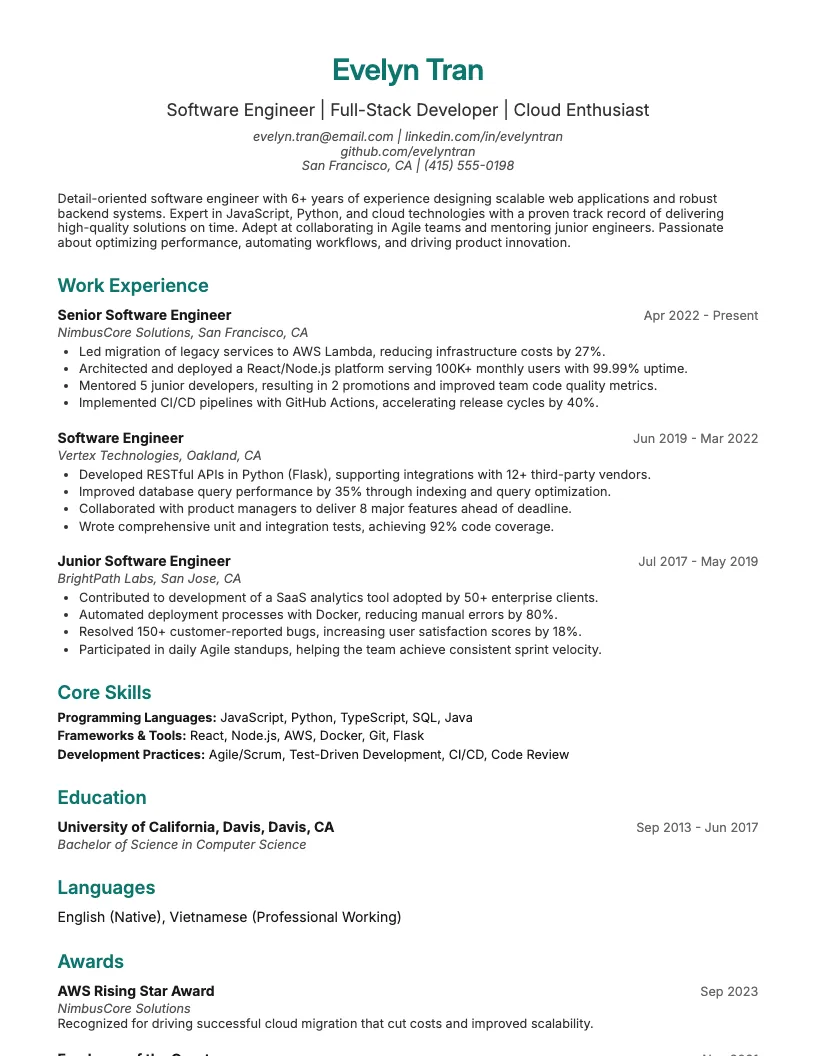 Click to enlarge
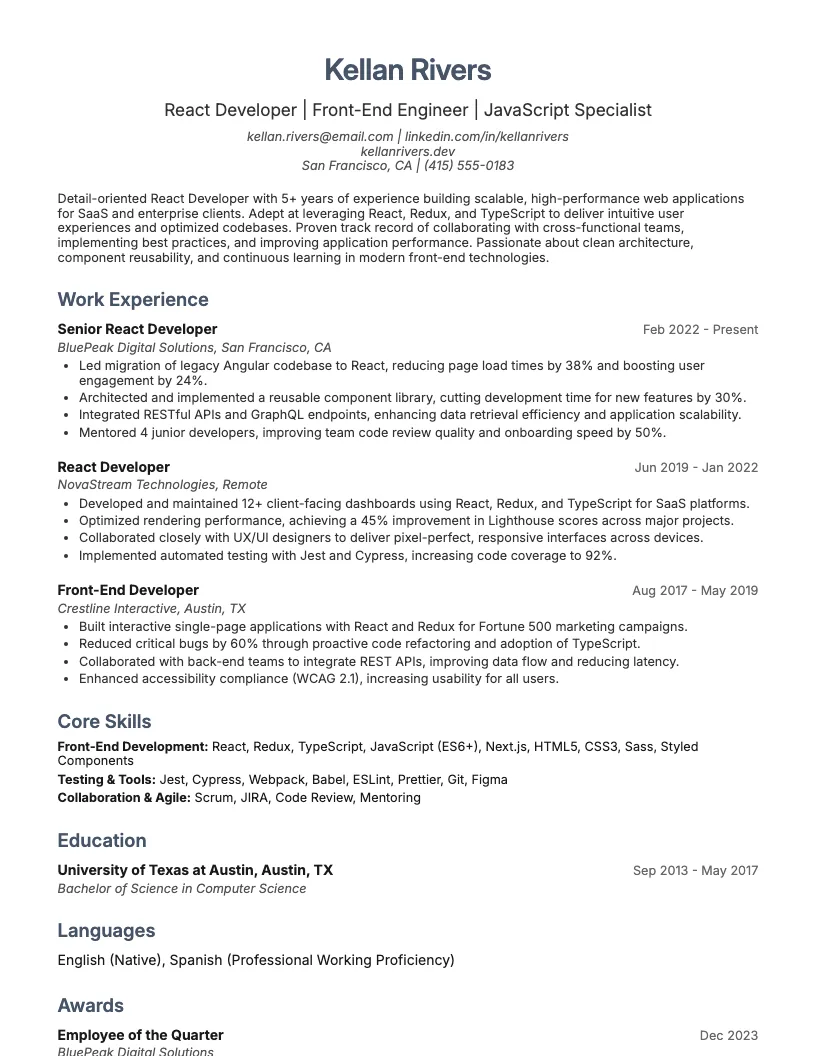 Click to enlarge
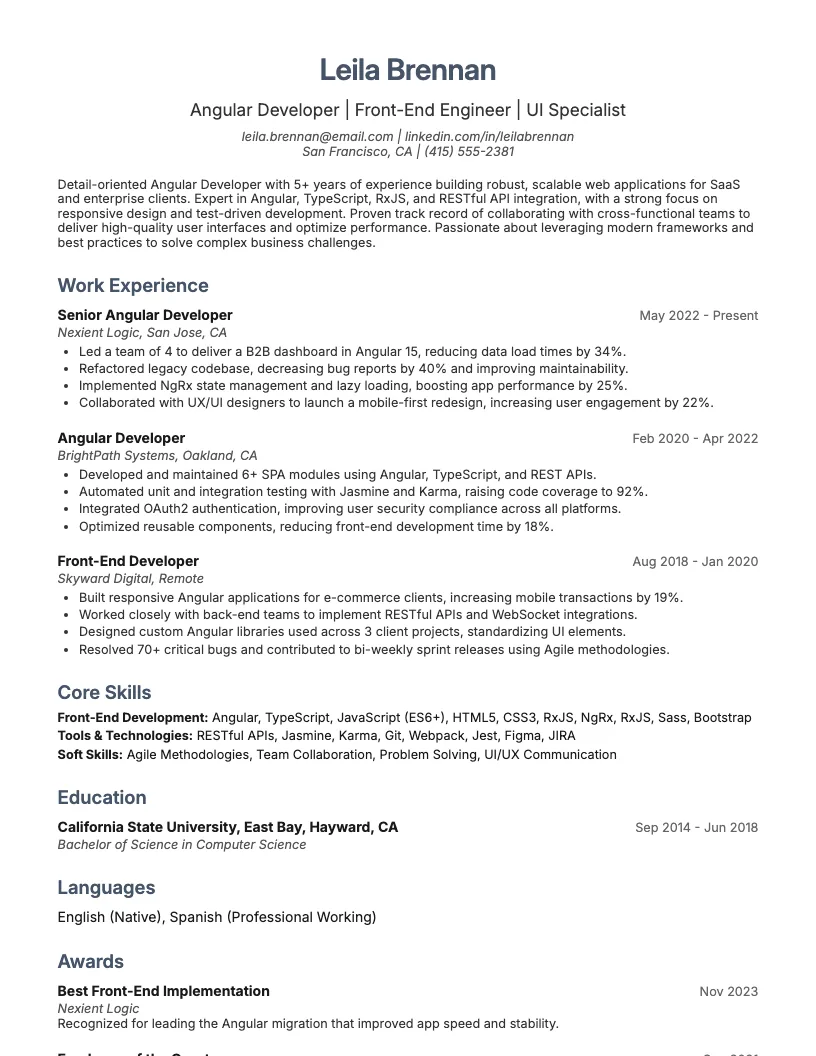 Click to enlarge
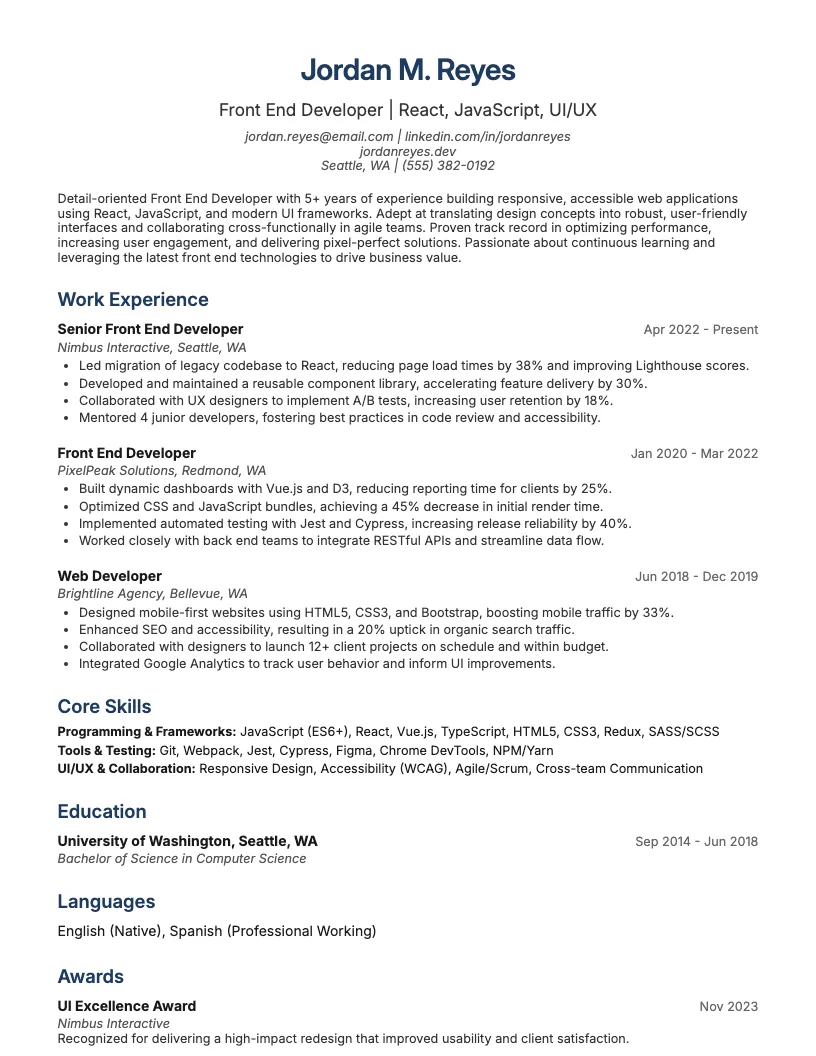 Click to enlarge
 Click to enlarge
Common questions about Full Stack Javascript Developer resumes
A Full Stack Javascript Developer resume template is a pre-designed layout tailored to showcase your skills in JavaScript technologies, front-end and back-end frameworks, and project experience. ResumeJudge helps you highlight relevant expertise easily.
Yes, ResumeJudge’s templates are ATS-friendly, ensuring your resume passes automated screening systems used by tech employers. This maximizes your chances of landing interviews at startups or large software companies.
Use this template when applying for roles like web developer, software engineer, or tech lead in industries such as SaaS, e-commerce, or finance. ResumeJudge makes it easy to tailor your resume to these fields.
Absolutely! ResumeJudge allows you to personalize sections, fonts, and colors to match your style or target company requirements, making your resume stand out to recruiters.
This template highlights JavaScript frameworks, full stack projects, and relevant tools, unlike generic templates. ResumeJudge ensures your technical skills and project impact are front and center.
Your resume should ideally be one page, especially for early or mid-career roles. ResumeJudge’s templates help you keep content concise while showcasing your full stack expertise effectively.
Yes, ResumeJudge templates are designed for quick edits. You can easily add new skills, certifications, or projects as your experience grows, keeping your resume current.
Include sections like Skills, Work Experience, Projects, and Education. ResumeJudge templates make it simple to organize these sections for maximum impact.
Definitely! ResumeJudge templates let you highlight transferable JavaScript skills and relevant projects, making it easier to apply for roles in new sectors like fintech or healthcare.
Yes, freelancers can use these templates to showcase diverse projects, client work, and technical stacks. ResumeJudge helps you present your freelance experience professionally and clearly.
Explore more professional resume examples to inspire your job search
Use our AI-powered resume builder to create a professional, ATS-friendly resume in minutes.
Free to use • No credit card required