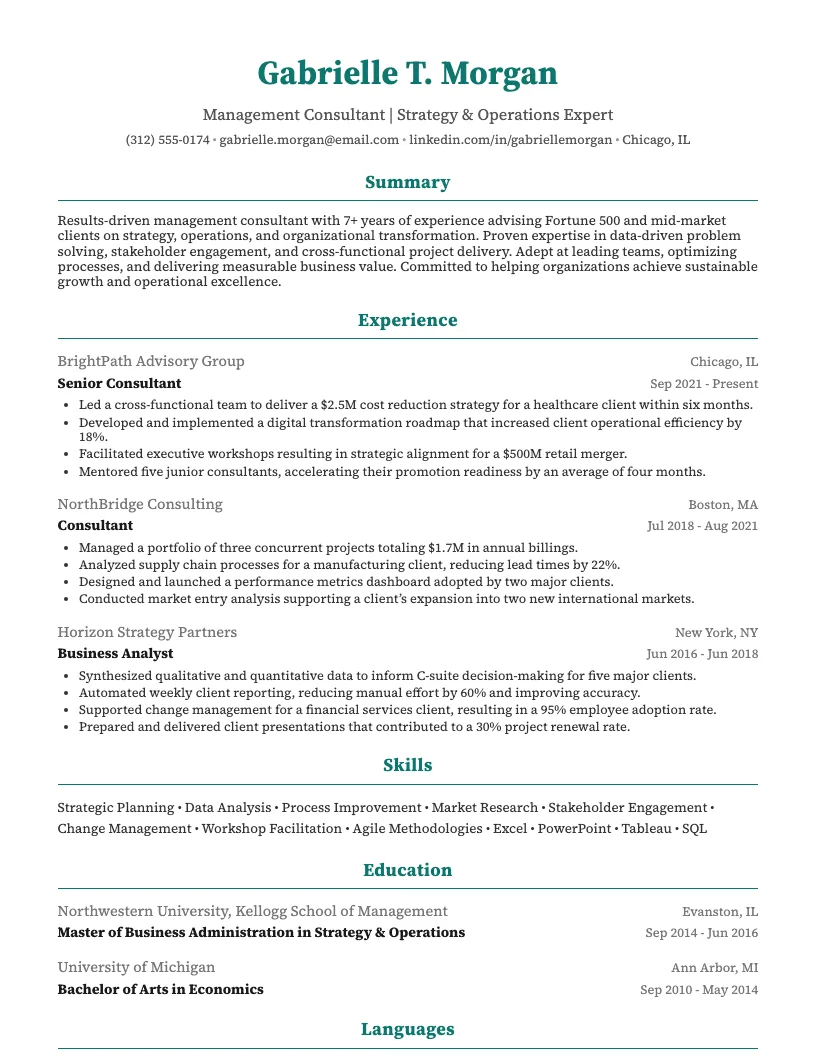
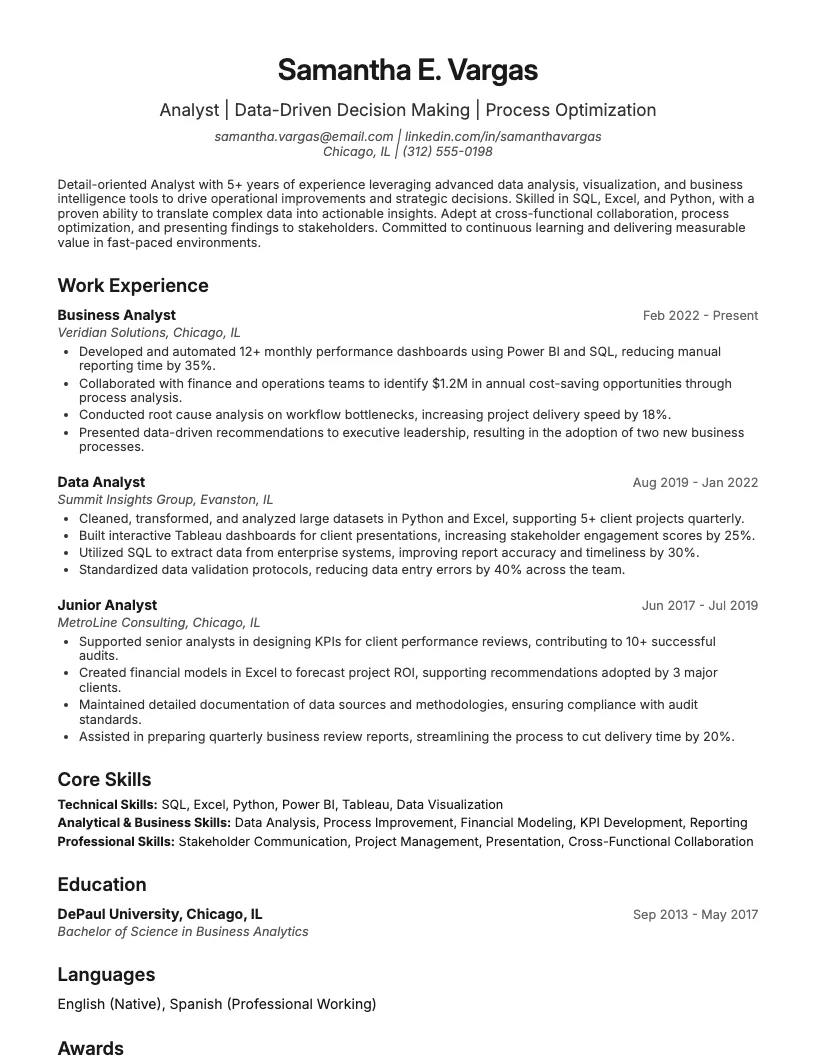
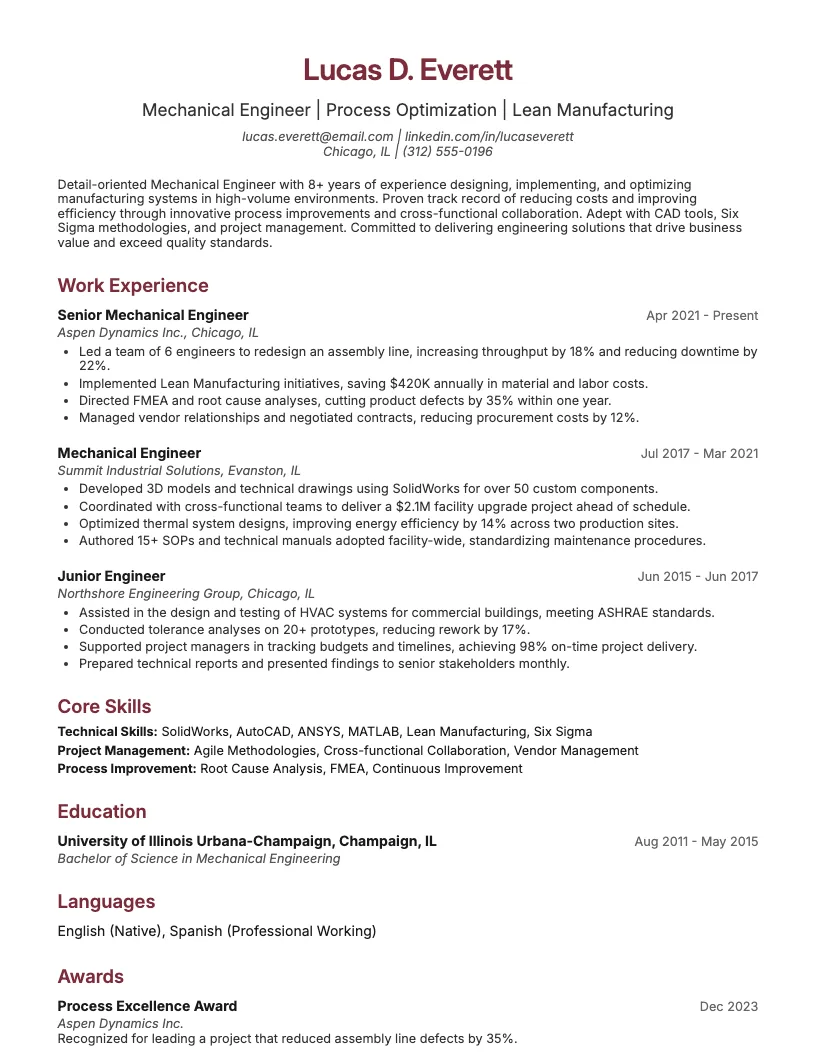
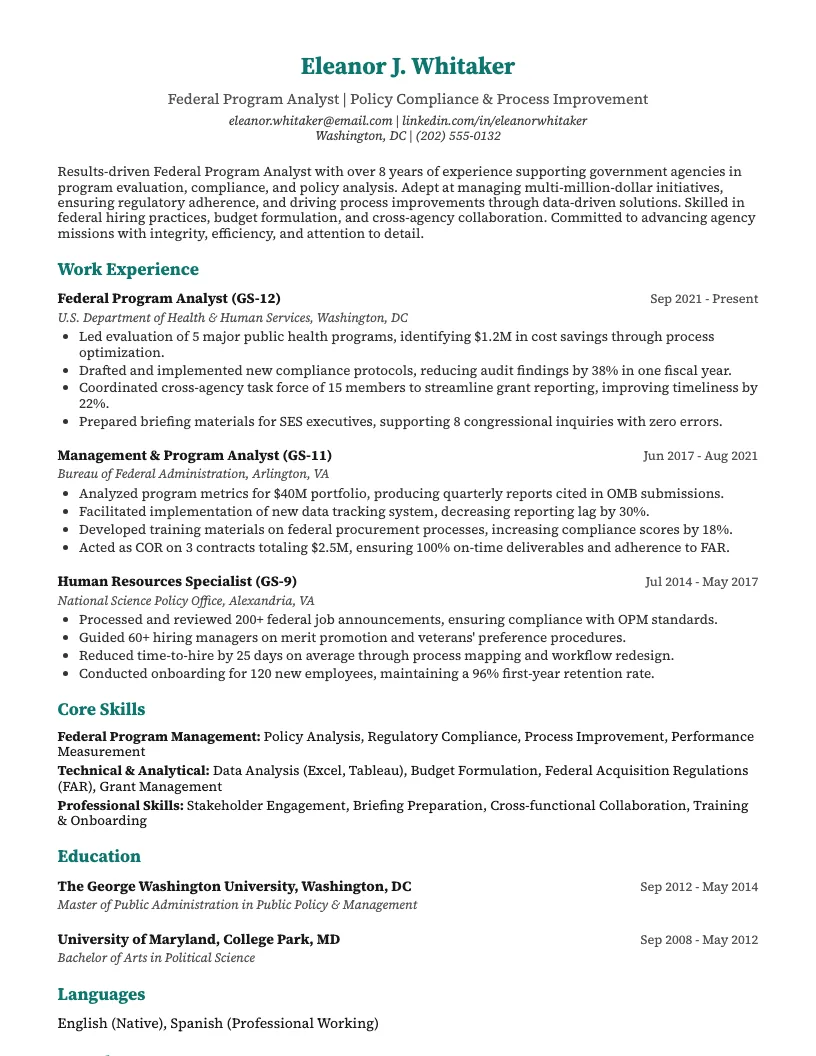
Environmental Scientist Resume Example
See full guide on Environmental Scientist resumes Click to enlarge
 Click to preview

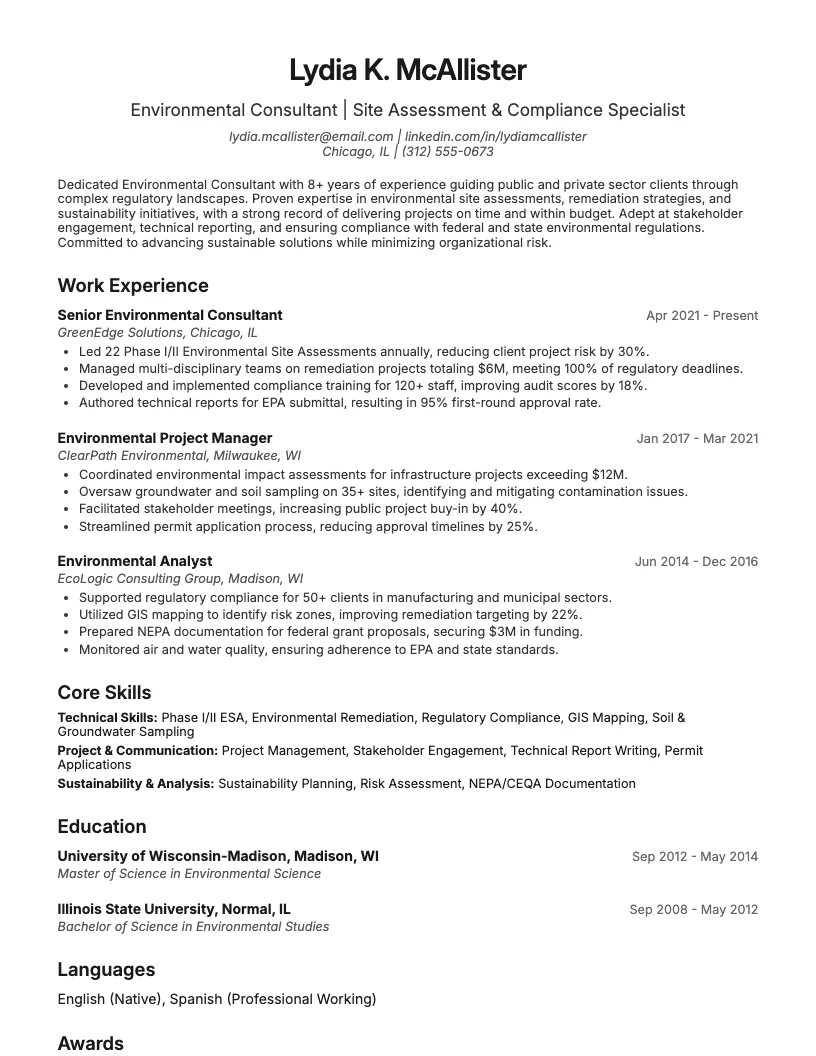
Get inspired by 50+ professional Environmental Consultant resume examples, each written by career experts and optimized to pass ATS scans. Pick a proven template, tailor it to your role, and download a polished resume in minutes.
Pick the specialization closest to your target role and start from a proven resume example.

A solid resume format helps you stand out to recruiters. You want your most recent experience right at the top, and everything easy to find.
Keep your resume under two pages. Focus on jobs and skills that actually relate to environmental consulting. That’s what hiring managers look for first.
I always start with a clear header. This includes my name, contact info, and a link to my LinkedIn or portfolio. It’s quick, but recruiters notice.
Next, I add a summary or career objective. This is where you show off your highlights and say why you fit the environmental consultant role in just a few lines.
You need a detailed experience section that shows your most recent work first. Focus on achievements, not just duties, and use numbers-like “reduced waste by 30%.”
Don’t forget a skills section. Recruiters want to see key words that match the job ad. List certifications and technical skills that set you apart.
Finally, education and certifications matter. Environmental consulting values degrees and ongoing learning, so show your credentials and any relevant training or licenses.
Recruiters want to see relevant certifications like LEED, EIT, or environmental science credentials. These show you’re serious about the field and meet industry standards.
They look for direct experience with things like environmental impact assessments, sustainability reporting, and regulatory compliance. Listing specific projects or quantifiable results really helps you stand out.
It’s smart to highlight tech skills: GIS, data analysis, or environmental sampling methods. Mentioning successful remediation or conservation projects with concrete outcomes adds proof to your expertise.
That’s what helps your resume make an impact-clear, targeted info that shows you’re ready for the job.
Your resume summary or objective sets the tone for your environmental consultant application. It’s the first thing hiring managers read, so you want it to stand out.
If you have experience, a resume summary helps you show off your top achievements and skills in just a few sentences.
If you’re new to the field or switching careers, a resume objective works better. It lets you focus on your goals and how your background fits the role.
Both options should be short-three to five sentences is enough. Let’s look at some real examples next.
A strong summary quickly shows your biggest wins. For example, focus on years of experience, technical skills, and real numbers-like reducing project emissions by 28% or saving clients $500K.
If you’re new to the field, highlight your transferable skills and clear goals. Say something like, “I use my research background and data analysis skills to drive sustainable solutions for complex projects.”
Use action words and be specific. This helps you stand out and makes it easy for managers to see the value you bring-right from the top of your resume.
You want your experience section to highlight what you actually achieve on the job. Recruiters scan for measurable results and real-world impact.
I suggest focusing on your biggest wins, specific responsibilities, and any solutions you deliver. Numbers, projects, and growth always help your experience stand out.
I always make a point to use numbers and percentages when describing my achievements. This helps show recruiters the real difference I make in each project.
You can highlight things like acres assessed, compliance rates improved, or the amount of funding you secure. Specific numbers add credibility and make your experience stand out.
Showcasing measurable outcomes-like a 30% reduction in emissions or leading five training sessions-proves your impact. It’s not just about what you do, but the results you deliver.
I always start my resume bullets with strong verbs. Words like analyze, spearhead, and implement show what I actually do-not just what I’m responsible for.
You want to highlight actions like evaluate, coordinate, audit, mitigate, and *present. These verbs grab attention and prove I drive real results, not just busywork.
Mix in industry terms like remediate, monitor, and assess. This helps your experience sound both credible and specific, which hiring managers notice right away.
If you’re just starting out, focus on your relevant coursework and any certifications. Listing a course like “Environmental Impact Assessment” or a certificate from OSHA shows you’ve got the basics.
Don’t forget to include university projects, volunteer work, or personal research. If I led a campus cleanup or analyzed local water samples, I mention it in my resume.
Highlight transferable skills like data analysis, teamwork, or report writing. These are super valuable in consulting and show how you’ll contribute from day one.
You can add a short, targeted objective statement at the top of your resume, and include a cover letter to further demonstrate your motivation. This helps recruiters see your passion and how you want to grow in the field.
I always wrap up by reminding myself: every bit of relevant experience counts-even outside formal jobs. That’s how you build a strong start in environmental consulting.
If you want to stand out as an environmental consultant, you need to show a mix of technical and soft skills. Both matter when recruiters scan your resume.
Most job ads mention at least five or six core skills. I always look for ways to showcase those skills right up front.
Technical know-how helps you solve environmental problems, while people skills help you work on teams and manage projects. Both are key in this field.
Certifications and education matter a lot when you want to stand out as an environmental consultant. They show you’ve put in the work, and you know your stuff.
You don’t need to list every degree or course. Focus on advanced education, relevant certifications, and anything that adds credibility. Mention your graduation dates and the institutions if possible.
Recruiters usually check for recent qualifications or niche knowledge. If you have something unique or industry-specific, put it near the top of your resume.
Certifications like Certified Environmental Professional (CEP) or LEED Accredited Professional show I have up-to-date expertise. Over 60% of recruiters value these for technical environmental roles.
You can also earn the Certified Hazardous Materials Manager (CHMM) or Professional Wetland Scientist (PWS) credentials. These highlight your specialized skills and make your resume stand out, especially when paired with a strong cover letter.
Always list the issuing organization and date. This helps recruiters verify your credentials quickly, and it shows that you keep your knowledge current in the field.
If you want to know how much environmental consultants make, you’re in the right place. Salaries change a lot depending on where you work.
I see some states pay more than others, even for the same job title. Let’s break down the numbers and see where you stand.
Sometimes your experience and skills alone don’t tell your full story. Adding extra sections can help you stand out and show recruiters what makes you unique.
Highlighting projects, awards, or volunteer work gives more insight into your abilities and values. These sections often make a difference when recruiters compare similar candidates.
Building a strong environmental consultant resume means focusing on what the job actually needs. I find that highlighting experience, certifications, and relevant skills really helps.
Keep your resume clear and to the point. Use numbers to show your impact, and stick to one or two pages max. Tailor everything to the specific role.
Ready to see what a great environmental consultant resume looks like? Let’s break down the essentials together.
I always start by reviewing the job ad and jotting down the top requirements, making sure my application includes a cover letter that addresses each one. This helps me match my experience to what actually matters for that role.
You want your resume to look sharp and professional. I use a clean layout, stick to one or two pages, and always save it as a PDF.
Quantify whenever you can. If you reduced waste by 20% or managed projects across three states, highlight those numbers. It shows your real-world impact.
Browse Environmental Consultant resume examples for related roles. Preview any example, open it in the builder, or read its full guide.
Click to enlarge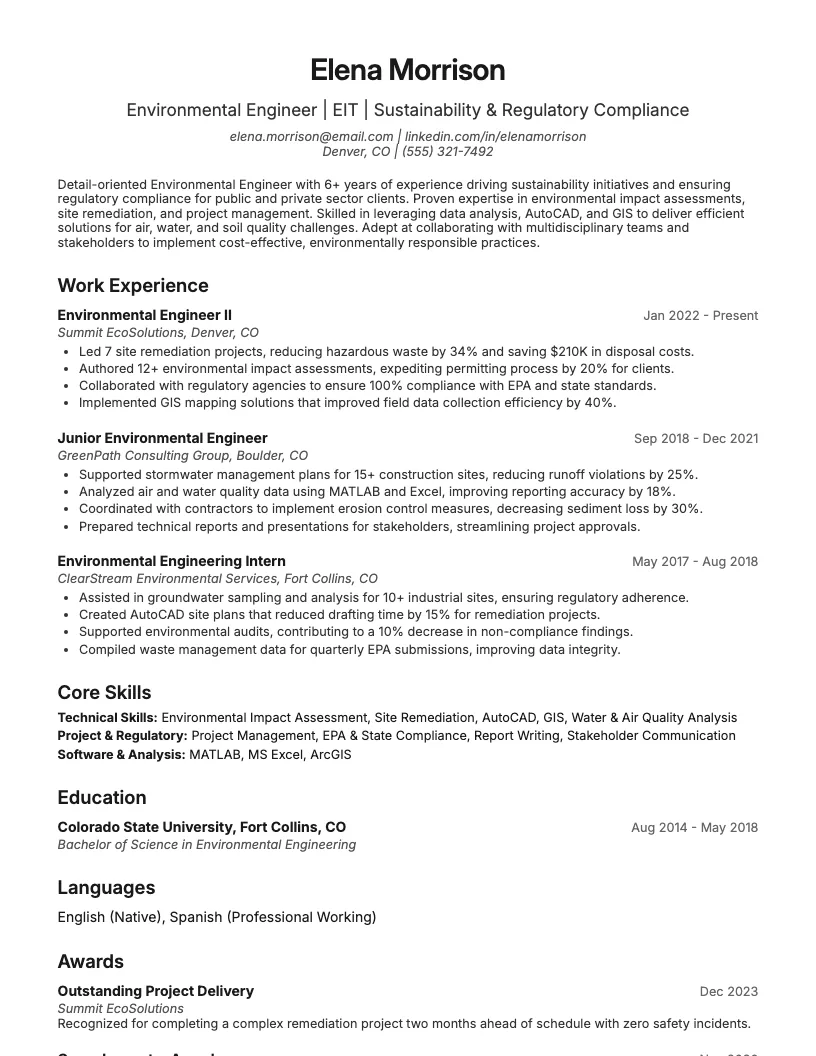 Click to enlarge
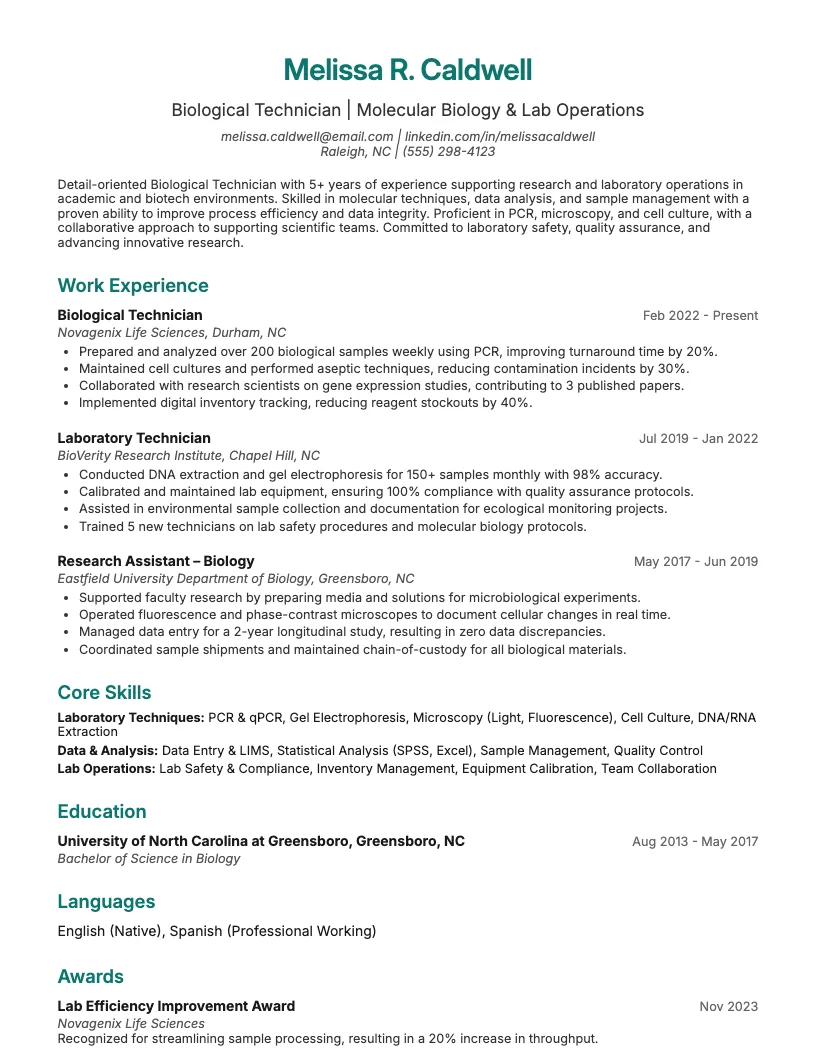 Click to enlarge
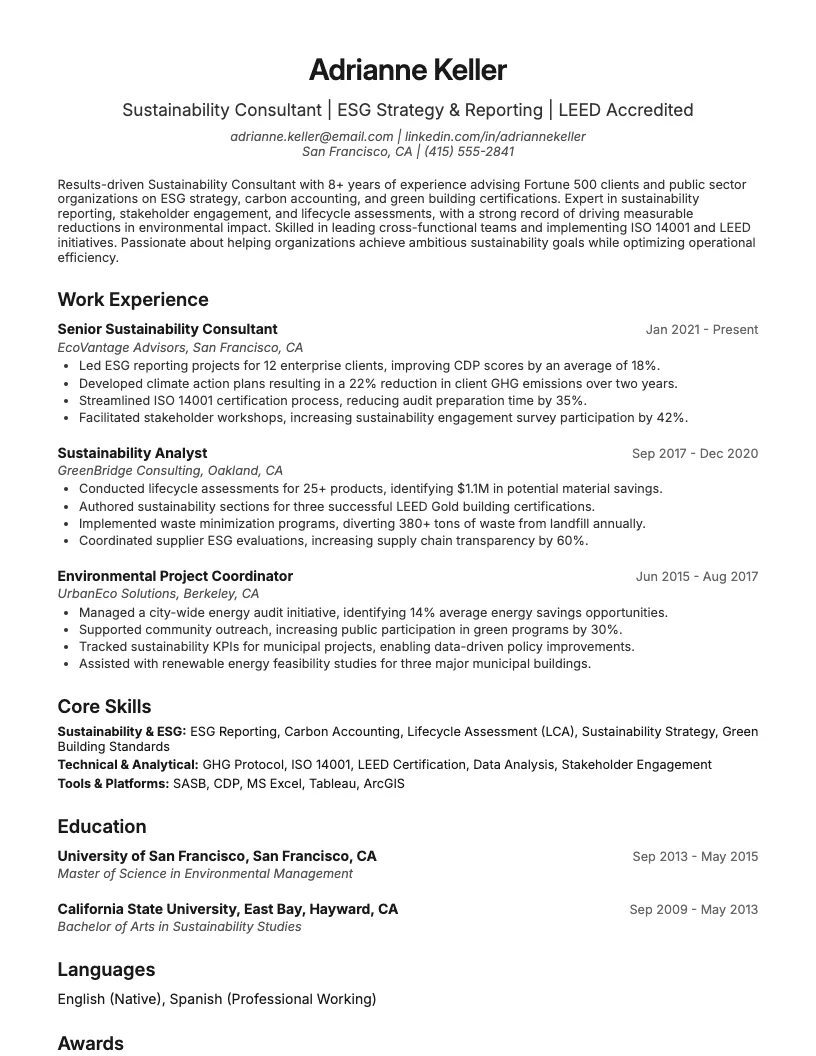 Click to enlarge
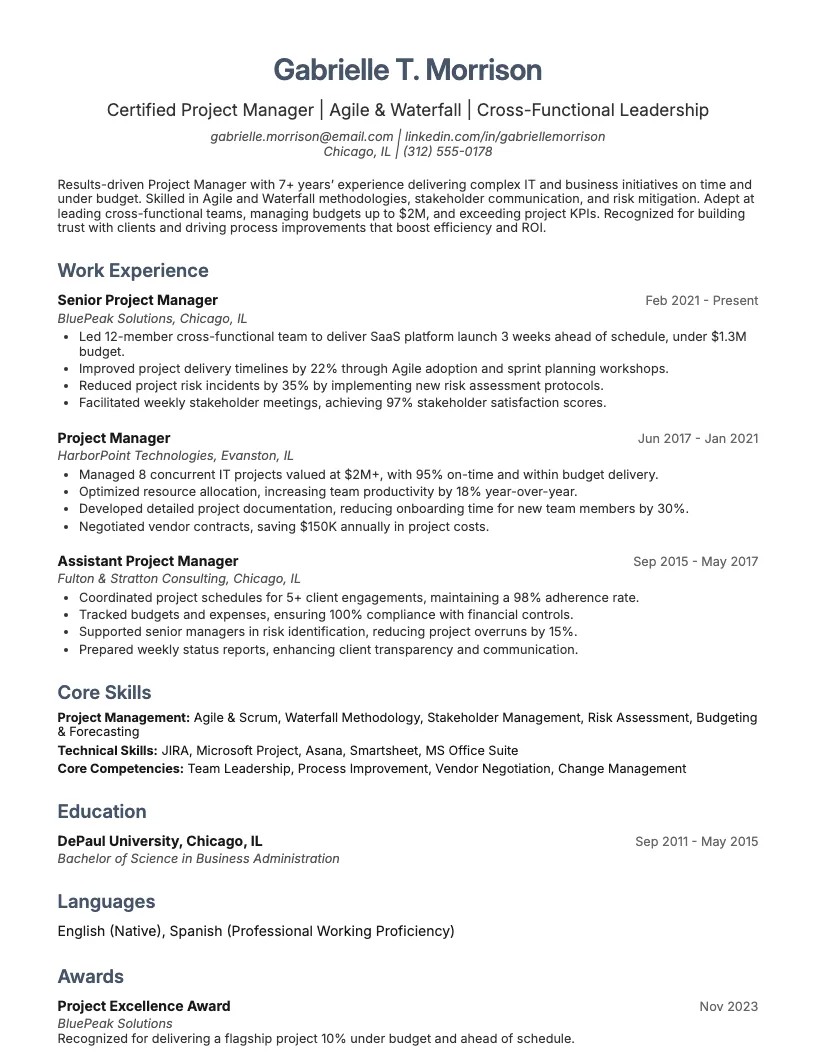 Click to enlarge Click to enlarge
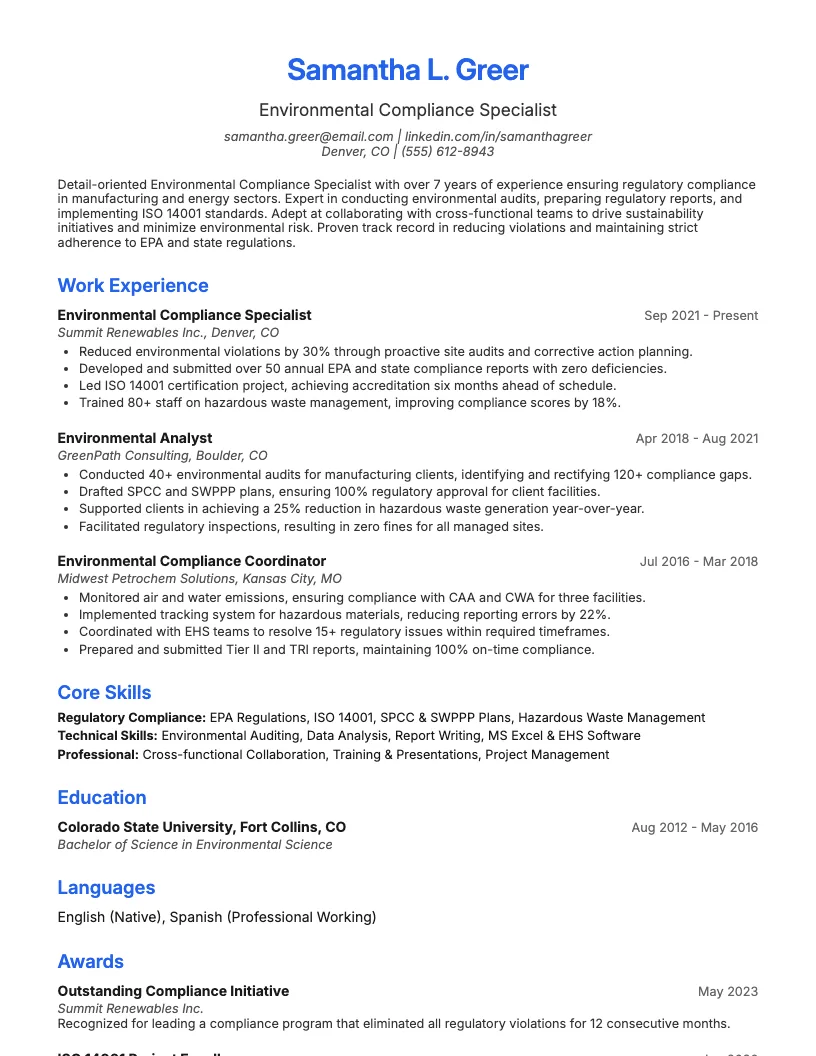 Click to enlarge
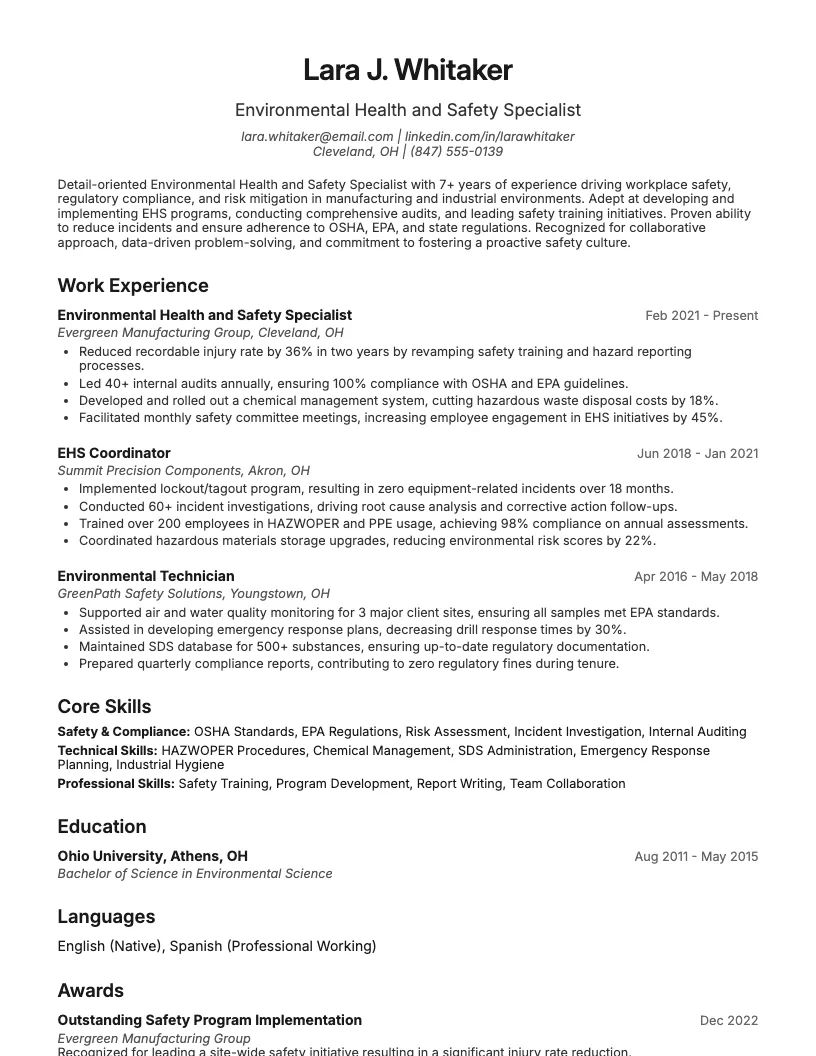 Click to enlarge
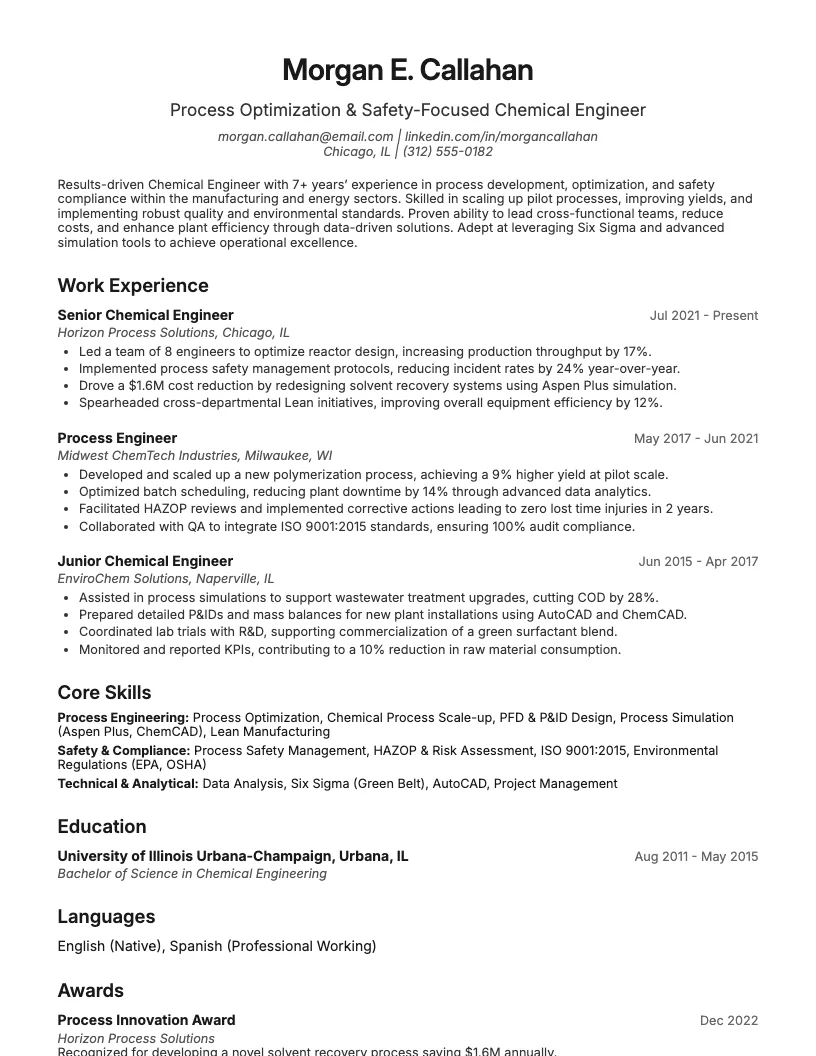 Click to enlarge
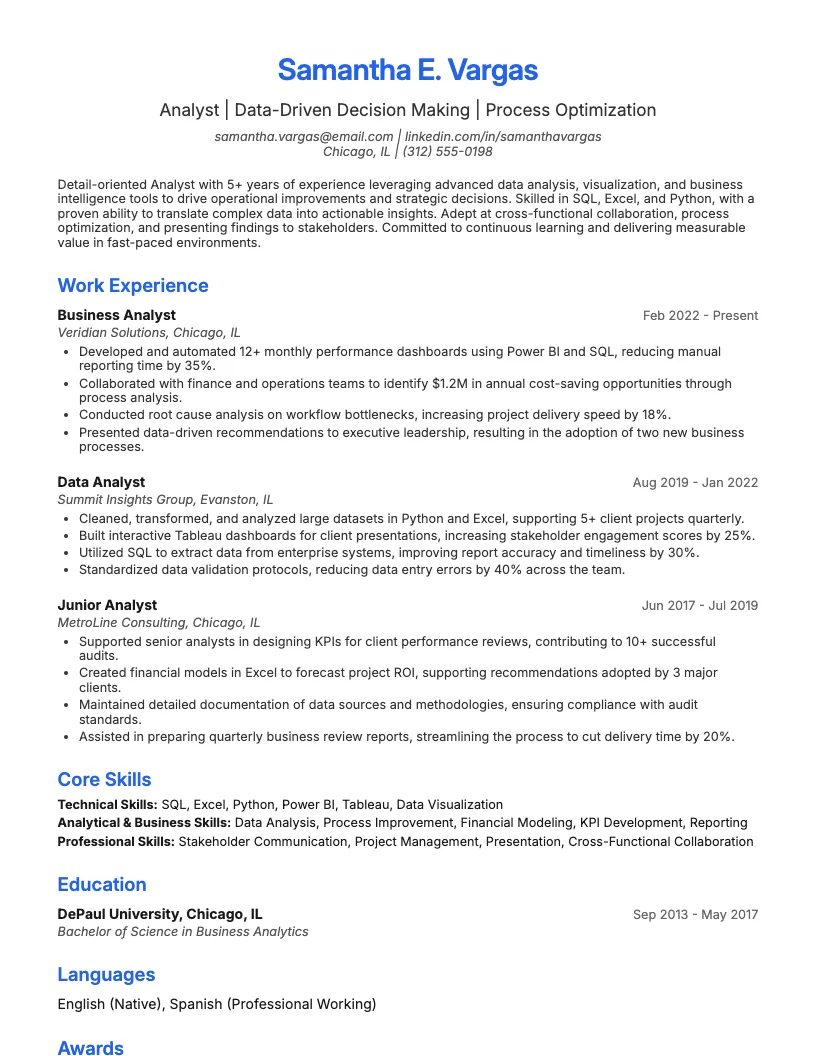 Click to enlarge
Common questions about Environmental Consultant resumes
An Environmental Consultant resume template is a pre-designed layout tailored for professionals in environmental science, sustainability, and compliance. It highlights relevant skills and experience for roles in consulting, government, or industry.
Yes, most Environmental Consultant resume templates from ResumeJudge are ATS-friendly, ensuring your resume passes automated screenings. This boosts your chances of landing interviews in competitive fields.
Use this template when applying to jobs in environmental consulting, sustainability, engineering firms, or government agencies. It’s ideal for roles where showcasing technical expertise and project experience is vital.
Absolutely! ResumeJudge templates are fully customizable, letting you adjust sections for certifications, licenses, or specialized project work. This ensures your resume reflects your unique strengths.
Environmental Consultant templates focus on environmental regulations, site assessments, and project management. They differ from generic templates by emphasizing specialized skills relevant to this industry.
Aim for 1-2 pages, focusing on relevant experience and technical skills. ResumeJudge templates help you organize your achievements clearly, making your resume concise and impactful.
Showcase skills like environmental assessments, regulatory compliance, remediation, GIS, and stakeholder communication. ResumeJudge templates make it easy to organize these skills for maximum impact.
Yes, you can add certifications like LEED, ISO 14001, or HAZWOPER. ResumeJudge templates offer dedicated sections for certifications to help you stand out to employers.
Include keywords like ‘environmental impact assessment,’ ‘compliance,’ ‘remediation,’ and ‘sustainability.’ ResumeJudge templates are designed to help you integrate these terms naturally for better ATS results.
ResumeJudge offers industry-specific templates and expert tips to highlight your environmental expertise. This ensures your resume stands out to hiring managers in your target field.
Explore more professional resume examples to inspire your job search
Use our AI-powered resume builder to create a professional, ATS-friendly resume in minutes.
Free to use • No credit card required