Nursing Extern Resume Example
See full guide on Nursing Extern resumes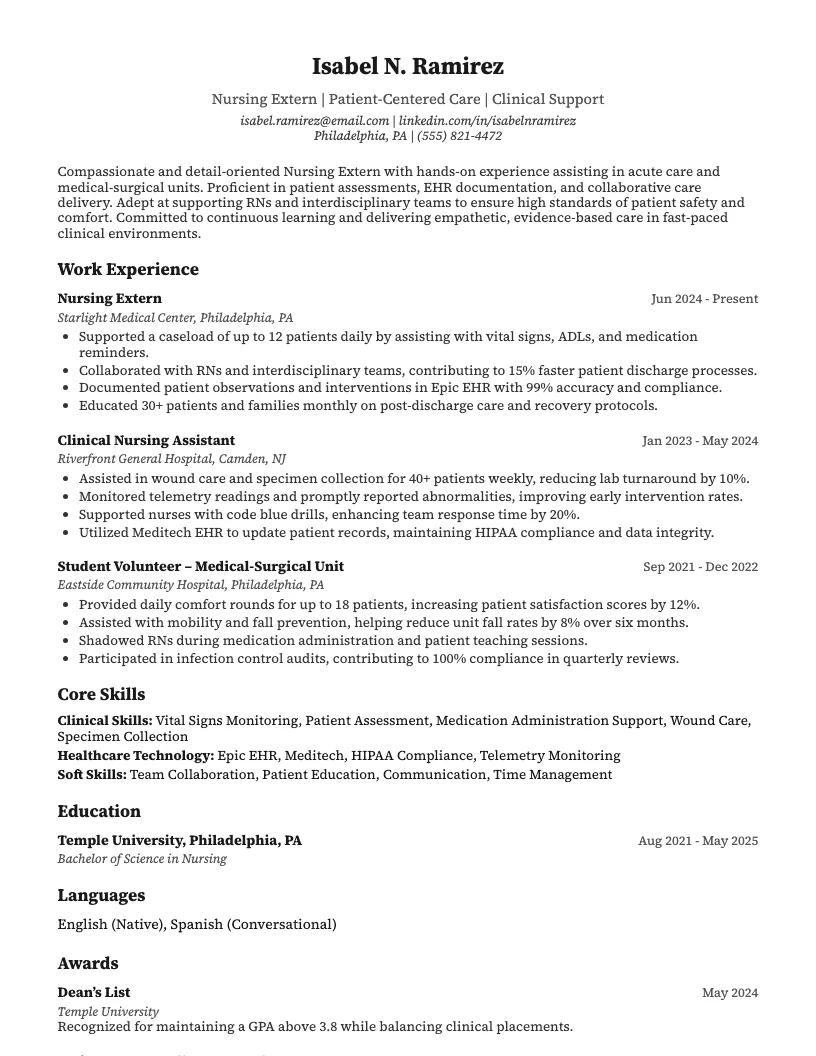 Click to enlarge
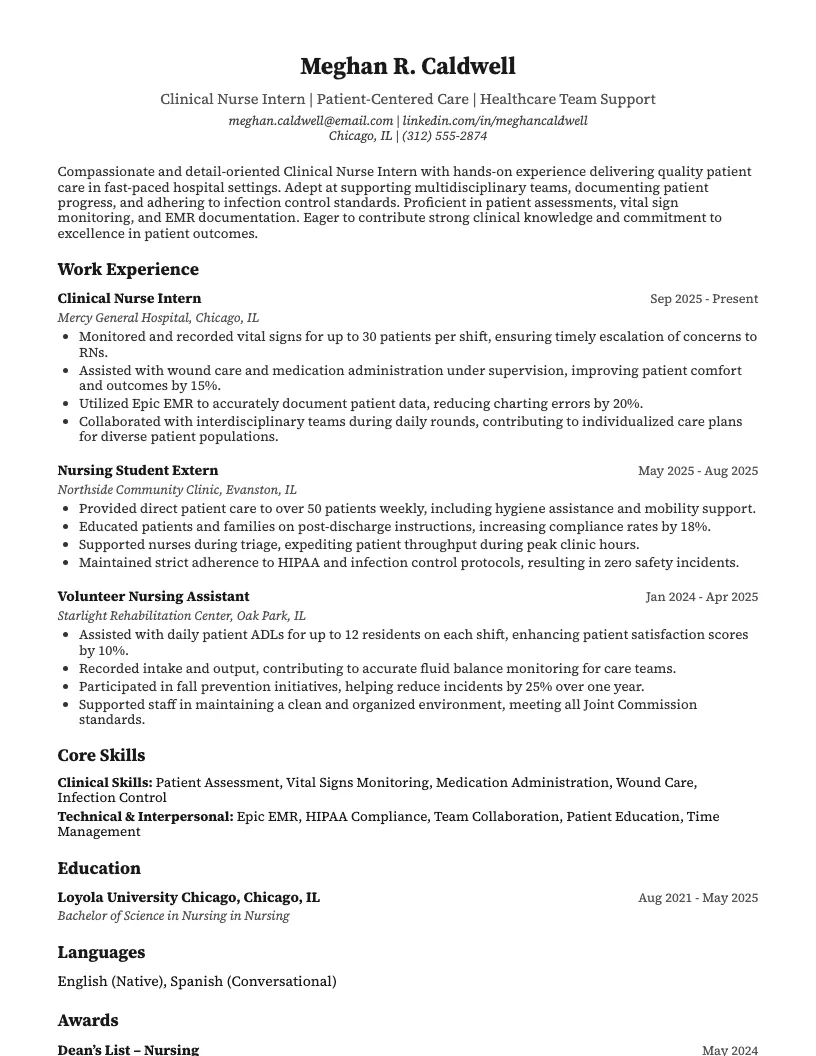 Click to preview

Get inspired by 50+ professional Clinical Nurse Intern resume examples, each written by career experts and optimized to pass ATS scans. Pick a proven template, tailor it to your role, and download a polished resume in minutes.
Pick the specialization closest to your target role and start from a proven resume example.
Landing a clinical nurse intern role takes more than just nursing knowledge. You need a resume that highlights your clinical skills and hands-on experience.
If you’re applying for internships, you probably have some clinical rotations or volunteer work. You want to show how you put your knowledge to work with patients.
I’ll break down what hiring managers want to see, from education to certifications. I’ll also cover how to format your experience and skills for a real shot at landing interviews.

Getting a clinical nurse intern job starts with a clear, targeted resume. You want to show your education, experience, and skills in a way recruiters notice fast.
I see that most health care recruiters spend less than 10 seconds on each resume. That means every section counts. Let’s break down what matters most.
A clinical nurse intern gets hands-on training in real healthcare settings. I assist with patient care, learn clinical procedures, and work directly with registered nurses and doctors.
This role is all about building practical skills and confidence. I handle tasks like taking vitals, documenting patient information, and supporting daily patient needs-usually under close supervision.
Most internships last between 8 to 12 weeks. During that time, you get exposure to different hospital departments, which helps you figure out where you want to focus your nursing career.
Understanding exactly what this role involves helps you target your resume. Employers want to see that you know the realities of clinical work and can handle fast-paced environments.
You want your clinical nurse intern resume to cover the basics: contact info, a short summary, education, and your clinical experience. These sections show who you are fast.
I always recommend including skills relevant to nursing, like patient care and teamwork. You can also add certifications-even CPR or BLS. This helps you stand out from other applicants.
If you have volunteer work or leadership roles, pop those in too. About 60% of recruiters say these extra sections help them see your potential beyond clinical skills.
I always stick to a clean and simple layout-nothing fancy. Use 11-12 pt font and keep margins around one inch. This makes everything easy to read.
Stick to reverse-chronological order. Employers want to see your most recent experience and education first. It saves them time and gets you noticed faster.
Limit your resume to one page if you have under five years of experience. Recruiters spend about 7 seconds scanning each resume, so short and clear wins every time.
A little white space helps, too. Don’t cram in too much text-let your achievements stand out. This way, your resume feels open and approachable.
Clinical nurse interns need a mix of technical know-how and people skills. Hospitals look for candidates with strong communication, teamwork, and problem-solving abilities.
You also want to show that you meet education requirements and hold relevant certifications. These help you stand out and prove you’re ready for hands-on patient care.
Clinical nurse interns use a mix of hard and soft skills every day. I see the best results when I balance both in my work.
You need strong clinical skills like administering medication, basic wound care, and understanding vital signs. Around 90% of intern job postings list these as must-haves.
Communication and teamwork matter just as much. You’ll build trust with patients and staff, solve problems, and adapt quickly. These skills help you stand out in busy hospital settings.
You need an active nursing student status in an accredited RN or BSN program-most hospitals want you to have finished at least the first clinical rotation.
Basic Life Support (BLS) certification is almost always required. Some places also ask for CPR or Advanced Cardiovascular Life Support (ACLS), especially if you’re in specialized units.
If you’re aiming for competitive programs, a GPA above 3.0 often helps. I always double-check with the hospital’s HR team for specific requirements. That’s how you avoid surprises.
Writing a resume summary for a clinical nurse intern role can feel tricky. You want to show your skills, experience, and dedication right away.
A good summary helps you stand out, even if you’re just starting your career. Recruiters often spend less than 10 seconds scanning resumes.
Here, I’ll share some effective approaches. You’ll see what works best for clinical nurse intern applications and how to make your summary count.
You want your summary to be clear, focused, and no longer than three sentences. Highlight your clinical skills, any certifications, and your passion for patient care.
I always mention specific achievements, like completing 120+ clinical hours or assisting in teams of 5-10 nurses. This helps hiring managers see real experience.
Use strong action verbs. Words like "collaborate," "administer," or "support" show what you actually do on the floor. This makes your summary pop and feel genuine.
Your work experience section is where you show the real impact you make as a clinical nurse intern. Recruiters look for hands-on skills, teamwork, and real patient care experience here.
You want to highlight specific tasks, responsibilities, and outcomes. Numbers speak louder than buzzwords-mention patient loads, procedures, or training hours if you can.
Describing your clinical experience the right way can really set your resume apart. Let’s get into how you can do this and what examples actually look like.
When I describe my clinical nurse intern experience, I focus on specific responsibilities and measurable outcomes. This helps hiring managers see exactly what I do.
You want to highlight the types of patients you assist, procedures you support, and any charting or documentation. For example, mention patient loads or shift lengths.
It's smart to use action verbs like "assess," "monitor," or "collaborate." Quantify your work when you can-like saying "assist with care for 10-12 patients per shift."
I always use action verbs and include measurable results in my bullet points. This shows what I actually do and how I make a difference.
You can write things like: "Monitor 10+ patients daily, record vital signs, and report changes to RNs" or "Assist with wound care for 20 post-op patients per shift."
Try to highlight teamwork, clear communication, and attention to detail. For example: "Collaborate with physicians and provide patient updates twice per shift."
This helps recruiters see your clinical skills in action. If you use numbers or percentages, it makes your experience more concrete and impressive.
Building a strong education section is key for any Clinical Nurse Intern resume. Hiring managers look for specific degrees and training before anything else.
If you highlight your nursing degree and certifications, you show you’re qualified. Even your clinical hours matter-they prove you know what you’re doing.
Listing your coursework and hands-on rotations gives recruiters a clear idea of your real-world experience. It’s all about showing where you learned your skills.
I always start my resume’s education section with my most recent nursing degree first. This puts my qualifications right up front, where recruiters look first.
You want to include the degree name, school, city, and graduation year. If you’re still finishing up, just add “Expected” before your graduation date.
Listing your GPA is a good move if it’s 3.5 or higher. This shows you’re dedicated and serious about your studies-employers like seeing that.
I always highlight my clinical hours and the key courses I take, like pharmacology, adult health, and pediatrics. This shows I’ve got a real foundation in direct patient care.
Listing your clinical rotations-for example, 120 hours in med-surg or 90 hours in pediatric care-helps hiring managers see where you’ve built hands-on skills.
You don’t need to list every course. Focus on the ones that match the internship or job you want. This keeps your resume focused and relevant.
Extra sections help you stand out. They show more about your skills, dedication, and achievements beyond your clinical rotations or education.
Things like certifications, volunteer work, and awards prove you go the extra mile. Many hiring managers say these details make a real difference in candidate selection.
Certifications and licenses are essential for a clinical nurse intern resume. They show you meet industry standards and can step into a healthcare environment with confidence.
I always add my BLS and CPR certifications right away. Most hospitals require at least Basic Life Support. If you have more, like ACLS or PALS, list those too.
You should also include your state nursing license status and consider adding a cover letter to further demonstrate your readiness. If you’re a nursing student, mention your eligibility for the NCLEX or your expected licensure date. This helps recruiters see your readiness.
I always list relevant volunteer work, like helping at local clinics or community health fairs. This shows I care about patient outcomes outside of paid roles.
You can include extracurriculars like being part of a nursing association or a campus health club. These activities prove your commitment and help you build soft skills employers value.
There are stats to back this up-over 70% of recruiters say volunteer experience makes a candidate stand out. This section is a real way to show initiative and teamwork.
Listing awards and honors shows you stand out. Hospitals and clinics often notice candidates with Dean’s List, scholarships, or nursing competition wins on their resumes.
I always include the award name, date, and a short reason I received it. This helps recruiters see the value right away.
There are lots of ways to earn recognition-clinical excellence, academic achievement, or leadership. Even something small, like perfect attendance, shows dedication. Use this section to wrap up your strengths.
If you’re applying for a clinical nurse intern role, you want a resume that gets noticed. I know what recruiters actually care about, and I’m here to help.
Here, you’ll find a downloadable template you can edit fast. I also show a real example of a strong clinical nurse intern resume, so you know what works.
I’ve put together a free, easy-to-edit resume template just for Clinical Nurse Interns. It’s designed in Word and PDF formats, so you can pick whichever works best for you.
You’ll find clearly labeled sections for education, skills, certifications, and clinical experience. This helps hiring managers spot what they want-faster. You can update each section in under 15 minutes.
I suggest tailoring your resume for each application and including a cover letter that highlights your strengths. Add your unique skills or any specific certifications you’ve earned, like BLS or ACLS. This small effort boosts your chances of getting interviews.
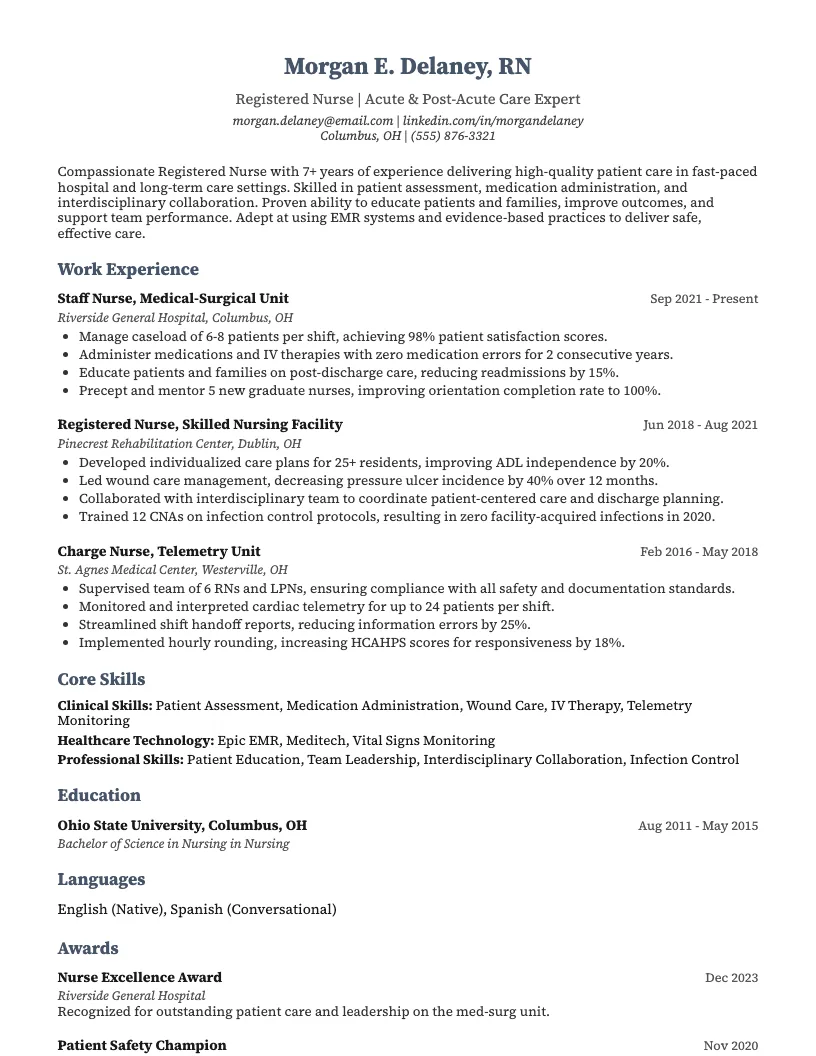
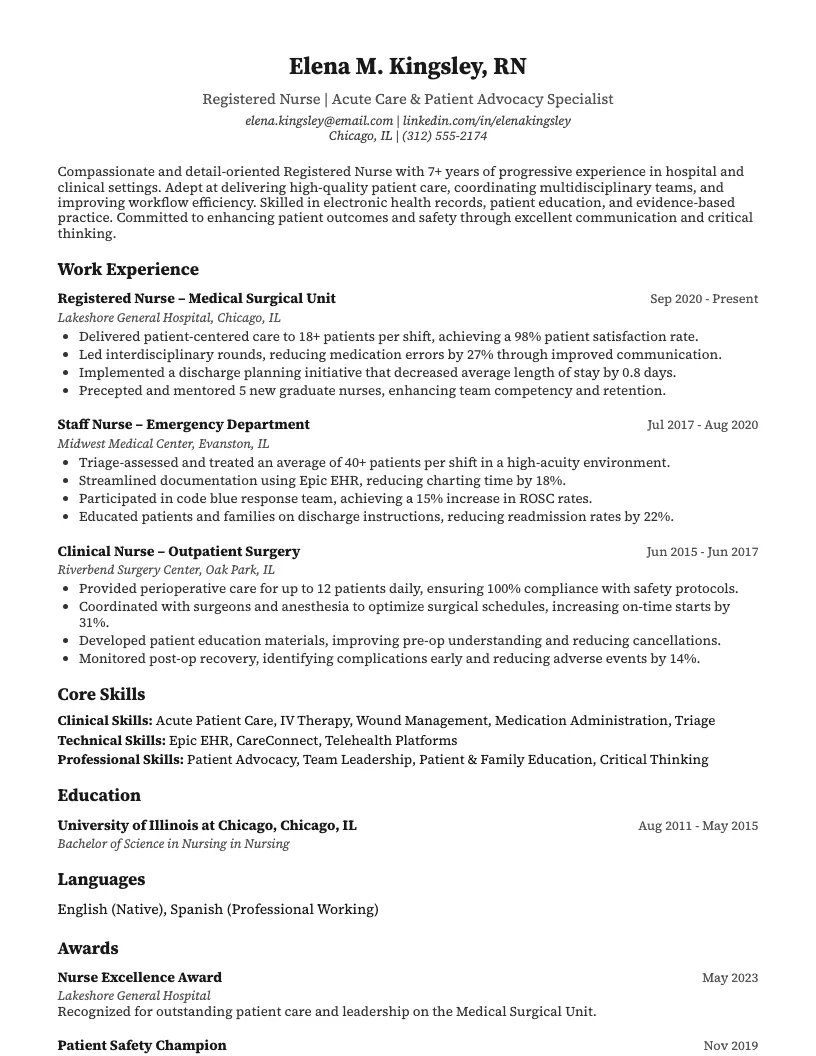
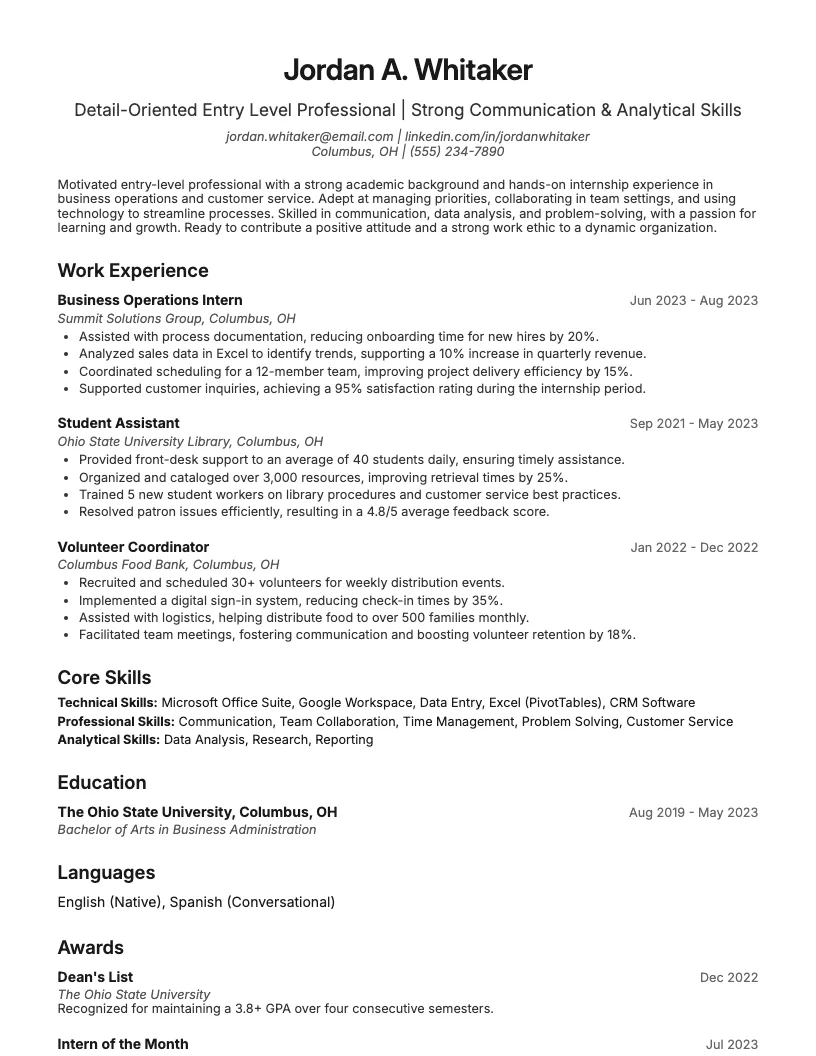
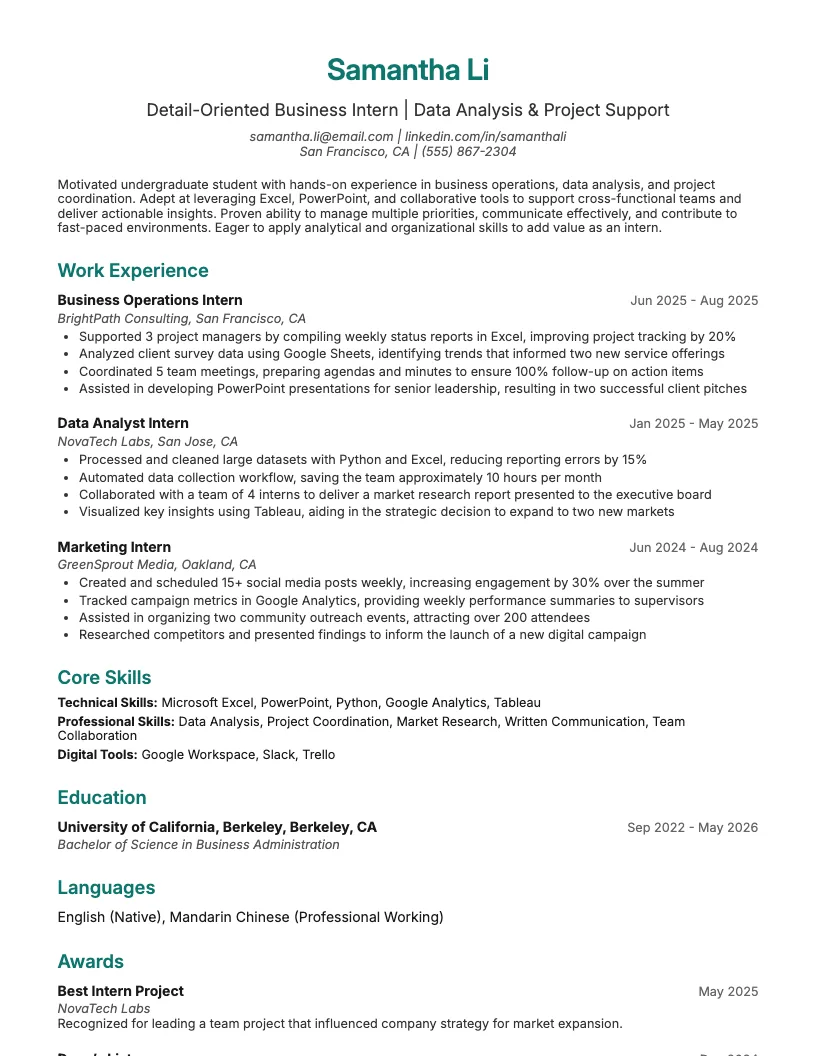
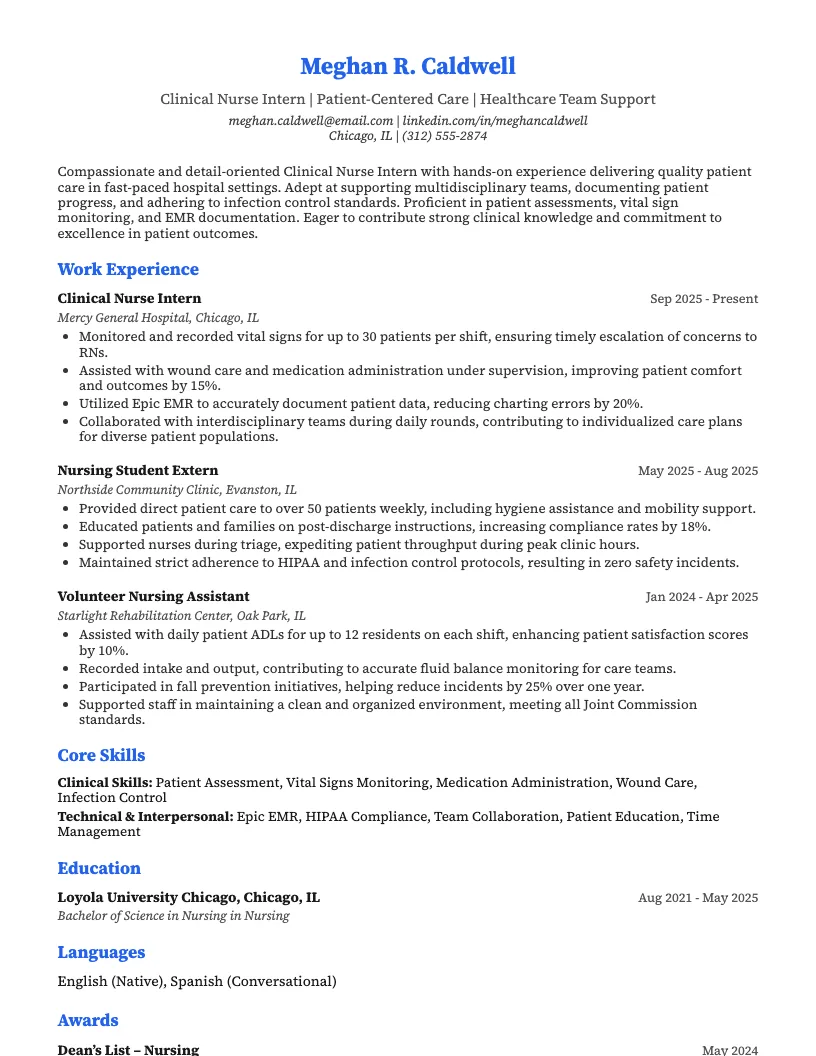
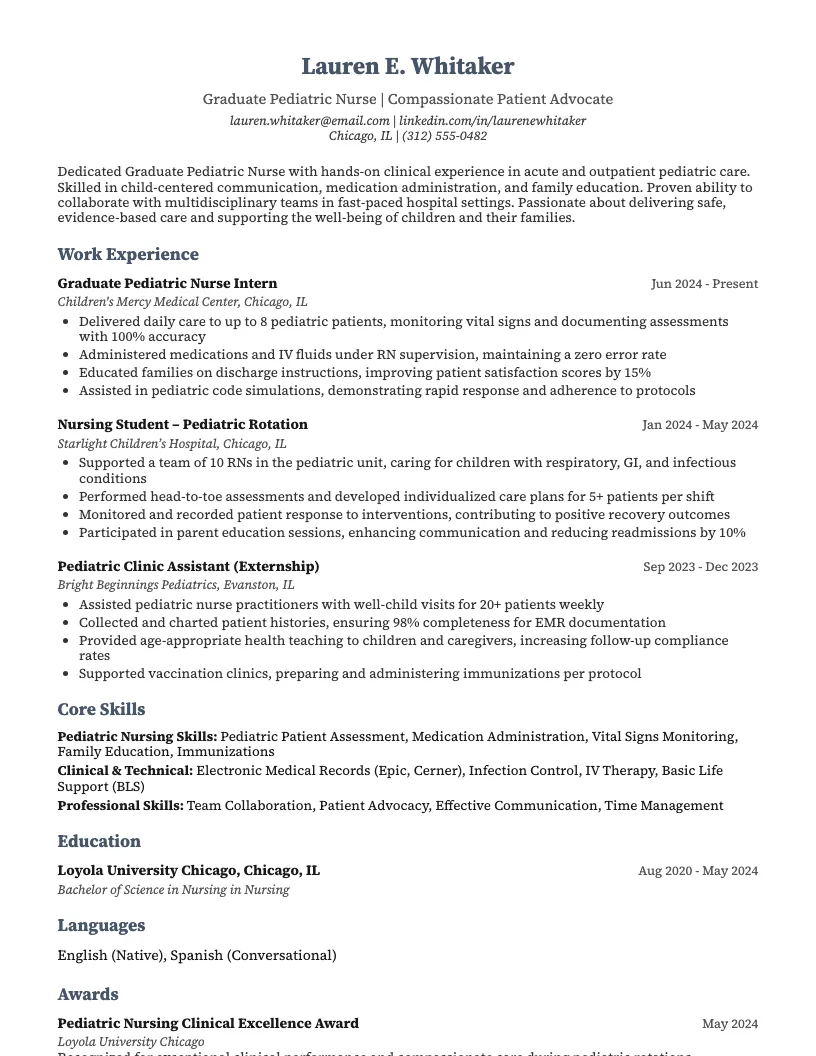
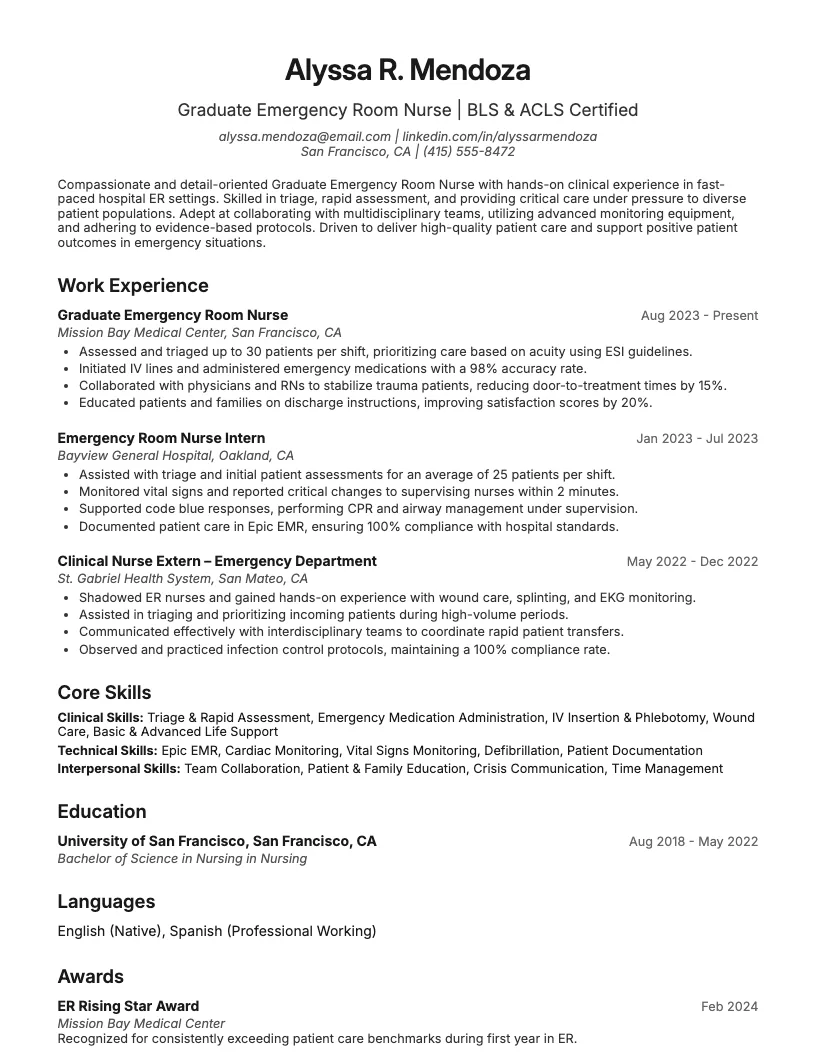
I want you to see what a strong Clinical Nurse Intern resume looks like in action. Here’s a sample that shows real skills, measurable results, and clear structure.
This example highlights direct patient care, teamwork, and technical skills like EMR documentation. It uses numbers-like patient ratios and clinical hours-to prove experience and impact.
You can use this sample as inspiration while building your own resume. Focus on clear timelines, concise bullet points, and solid metrics. This helps recruiters spot your strengths, fast.
Getting a clinical nurse intern spot isn’t easy. Hospitals get hundreds of applications for each opening, so every detail on your resume actually matters.
You want your application to stand out right away. I always focus on tailoring my resume and avoiding small mistakes that could cost me an interview.
Every Clinical Nurse Intern job description is unique. I always tweak my resume to match the exact skills and keywords listed in the posting.
Customizing your resume helps you stand out. Recruiters spend only about 7 seconds scanning each resume, so highlighting the right qualifications is essential.
You can focus on clinical rotations, relevant coursework, or specific certifications. This shows you actually read the job posting and understand what the employer wants.
I see a lot of resumes with spelling errors and missing contact info. A single typo can make a hiring manager skip your application. Triple-check everything before you hit send.
You want to avoid vague statements like "hard worker" or "team player." Instead, use concrete examples and numbers. For example, say you assisted with 20+ patient assessments during clinical rotations.
Some people leave out vital certifications, like BLS or CPR. If you have any active certifications, always list them clearly. This shows you’re ready for patient care from day one.
Missing those small details can really hold you back. Focus on clarity and accuracy to stand out in a crowded field. That little extra effort helps you get noticed.
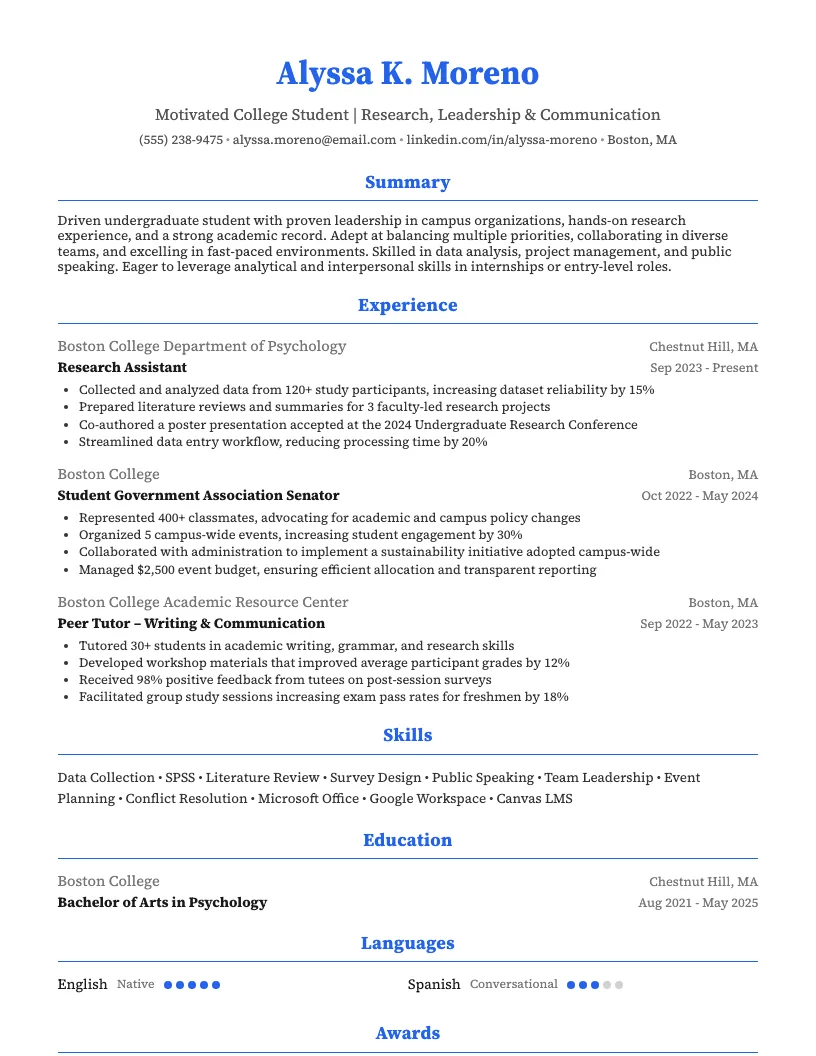
Browse Clinical Nurse Intern resume examples for related roles. Preview any example, open it in the builder, or read its full guide.
Click to enlarge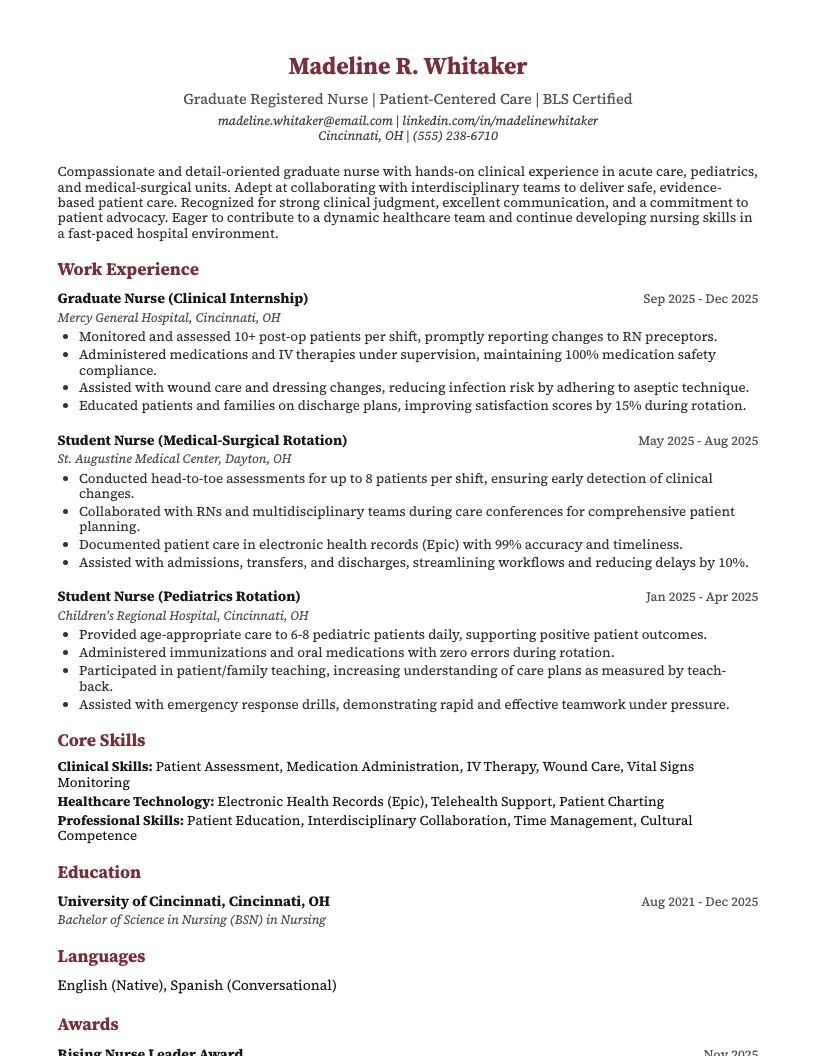 Click to enlarge
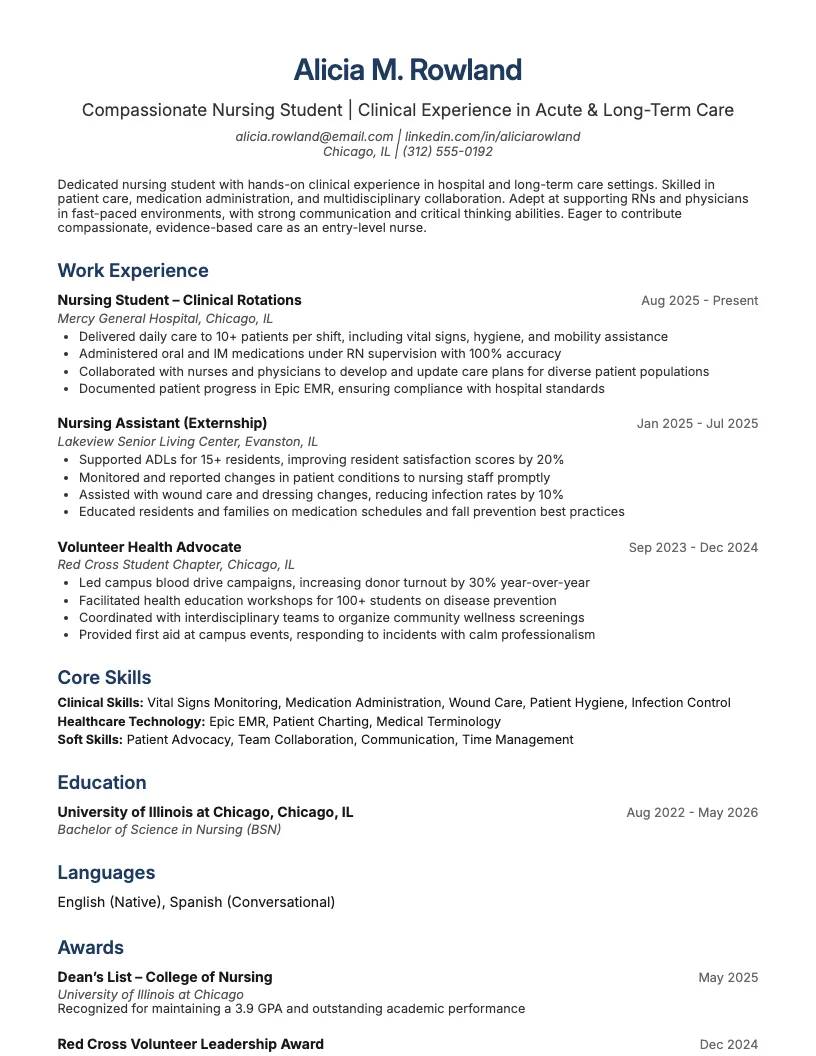 Click to enlarge
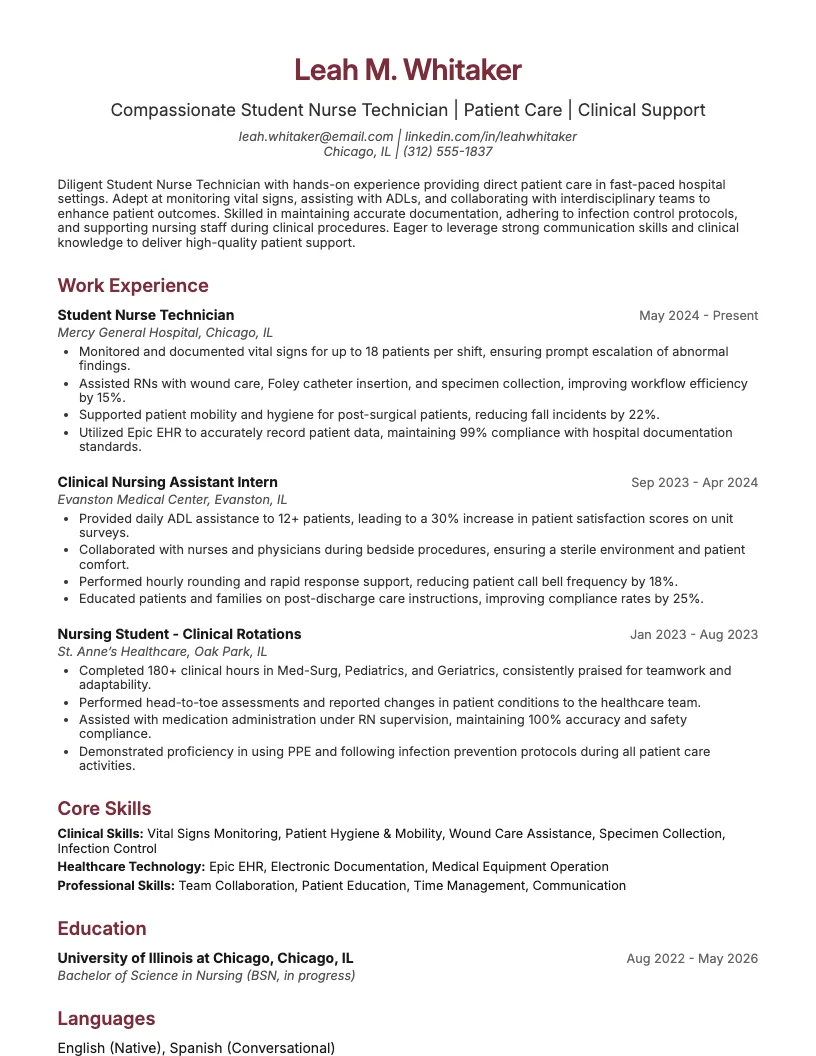 Click to enlarge
 Click to enlarge
 Click to enlarge
Common questions about Clinical Nurse Intern resumes
A Clinical Nurse Intern resume template is a pre-designed document tailored for nursing students or recent grads applying for clinical internships. It highlights relevant skills, education, and clinical experience.
Most Clinical Nurse Intern resume templates from ResumeJudge are ATS-friendly, ensuring your resume passes digital screening. This increases your chances of landing interviews in hospitals and clinics.
Use a Clinical Nurse Intern resume template when applying for internships in hospitals, clinics, or healthcare centers. It's also great for externships or entry-level nursing roles.
Yes, ResumeJudge templates are fully customizable. You can easily update sections like clinical rotations, certifications, and skills to match your experience and the job description.
Clinical Nurse Intern templates are tailored for those with limited experience, focusing on training, coursework, and clinical skills. Other templates may highlight advanced experience or specialized roles.
A Clinical Nurse Intern resume should be one page, focusing on relevant skills and clinical experience. ResumeJudge templates help you organize information concisely for easy reading.
While designed for intern roles, you can adapt these templates for similar entry-level healthcare positions, like nursing assistants or patient care techs, by tweaking sections with ResumeJudge.
Yes, most templates include dedicated areas for certifications like BLS, CPR, or HIPAA training. This helps you highlight important qualifications easily.
Absolutely! Clinical Nurse Intern templates are ideal for new graduates or students with limited work experience. ResumeJudge makes it simple to showcase your education and clinical hours.
ResumeJudge offers ATS-friendly, customizable templates and expert tips so your resume stands out in competitive clinical internship applications. You can save time and boost your chances of getting hired.
Explore more professional resume examples to inspire your job search
Use our AI-powered resume builder to create a professional, ATS-friendly resume in minutes.
Free to use • No credit card required