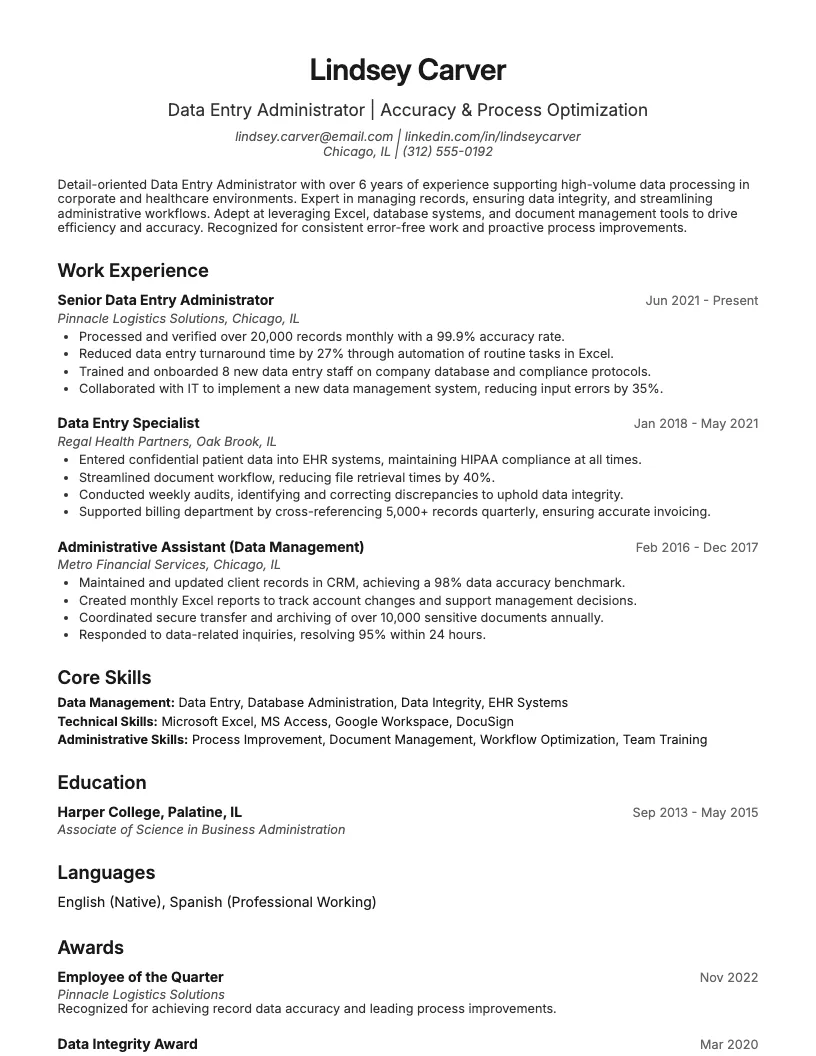
Data Entry Clerk Resume Example
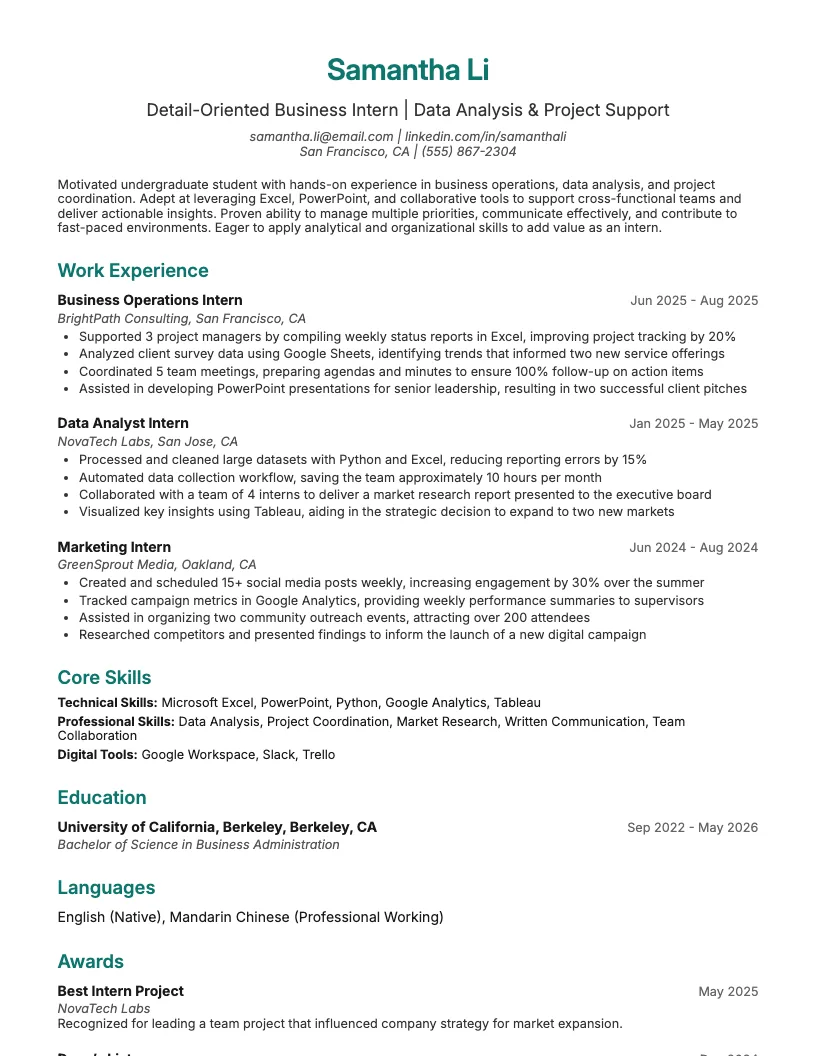
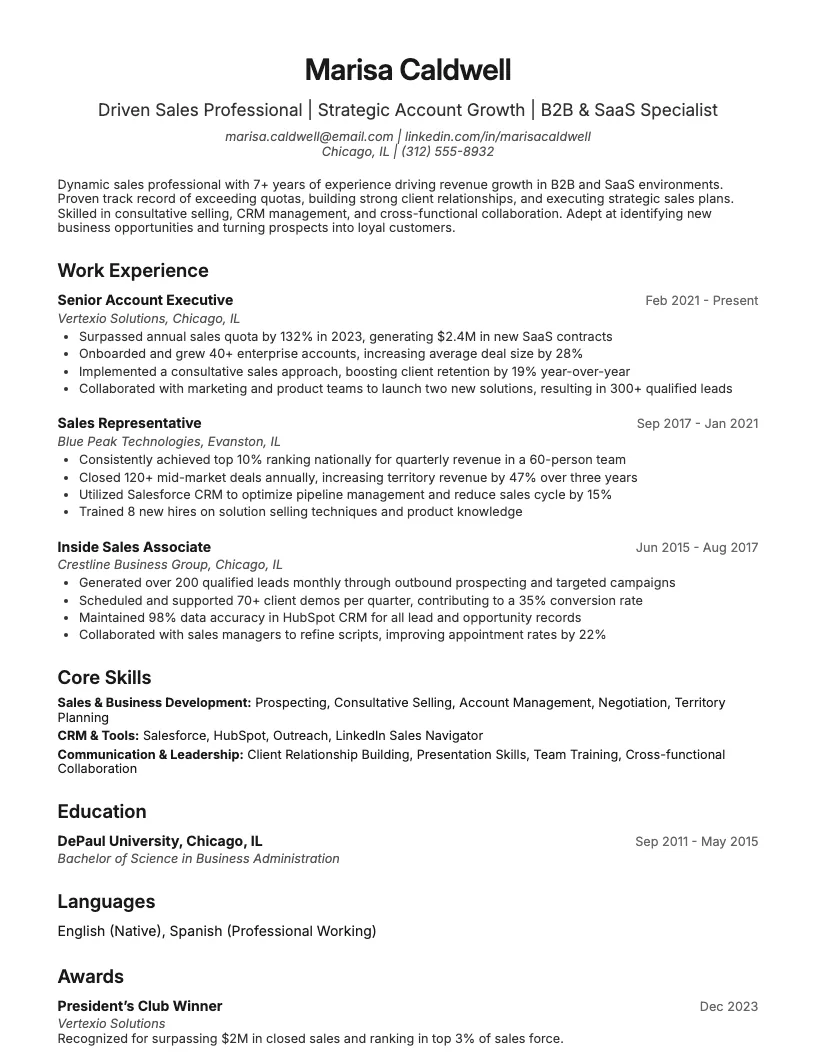
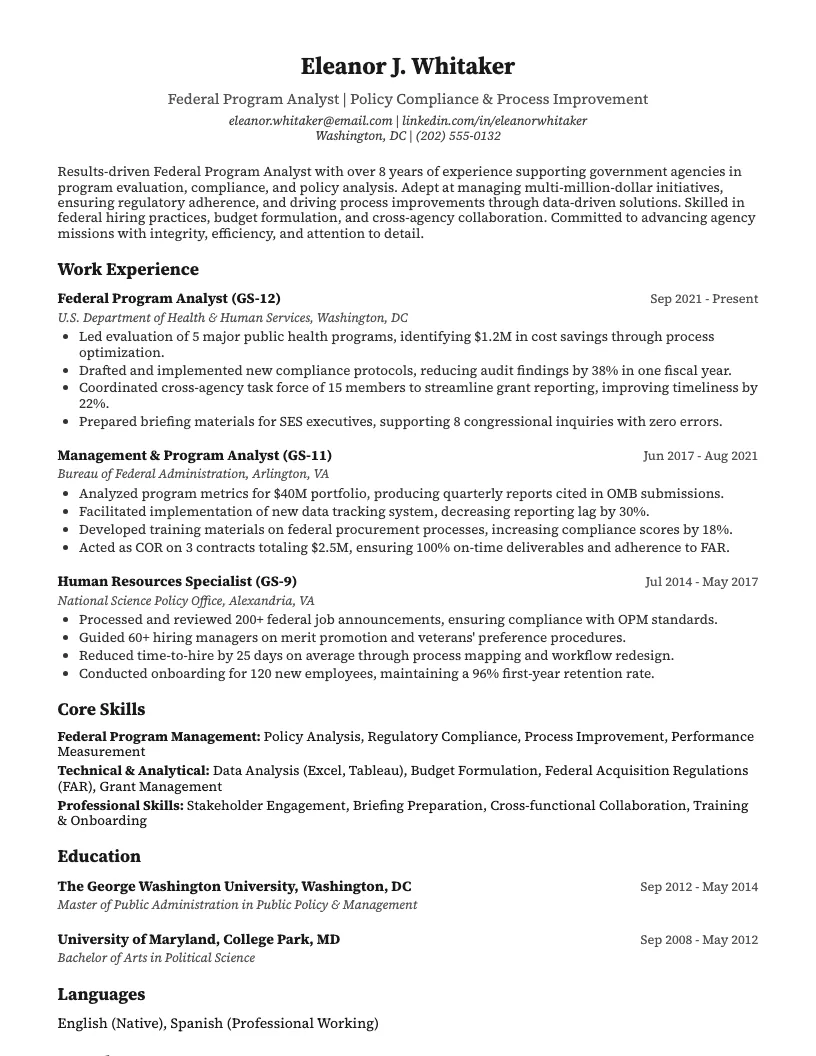
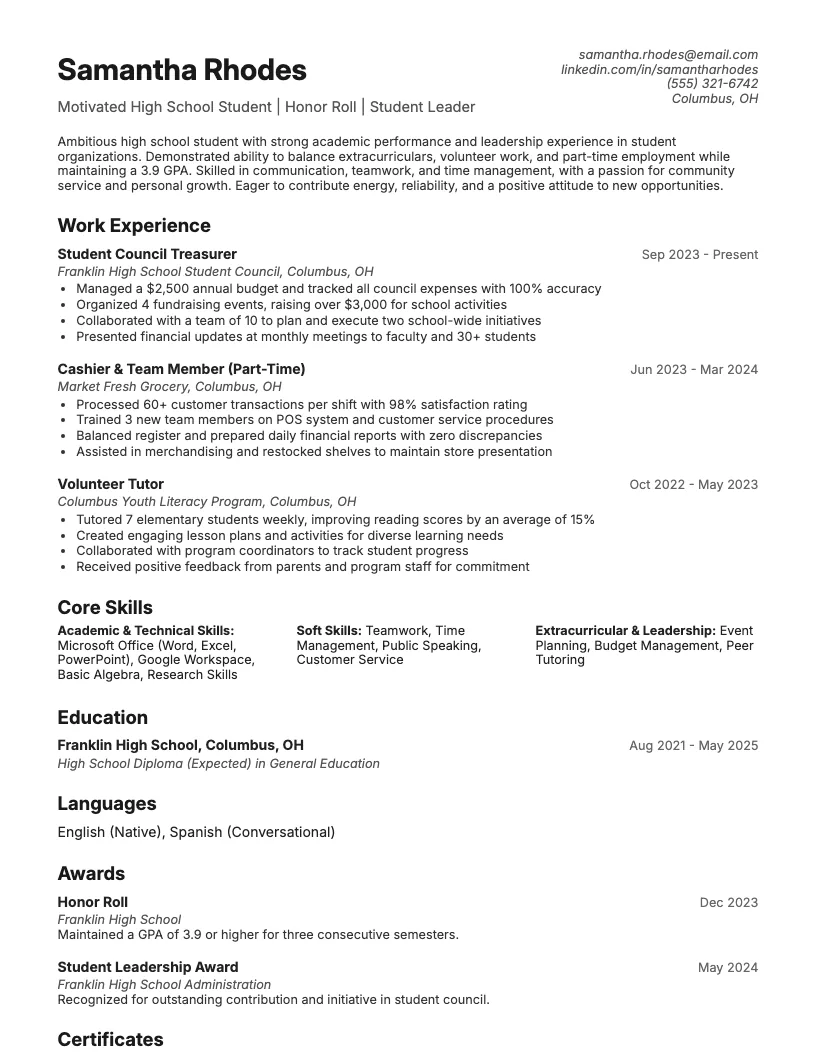
See full guide on Data Entry Clerk resumes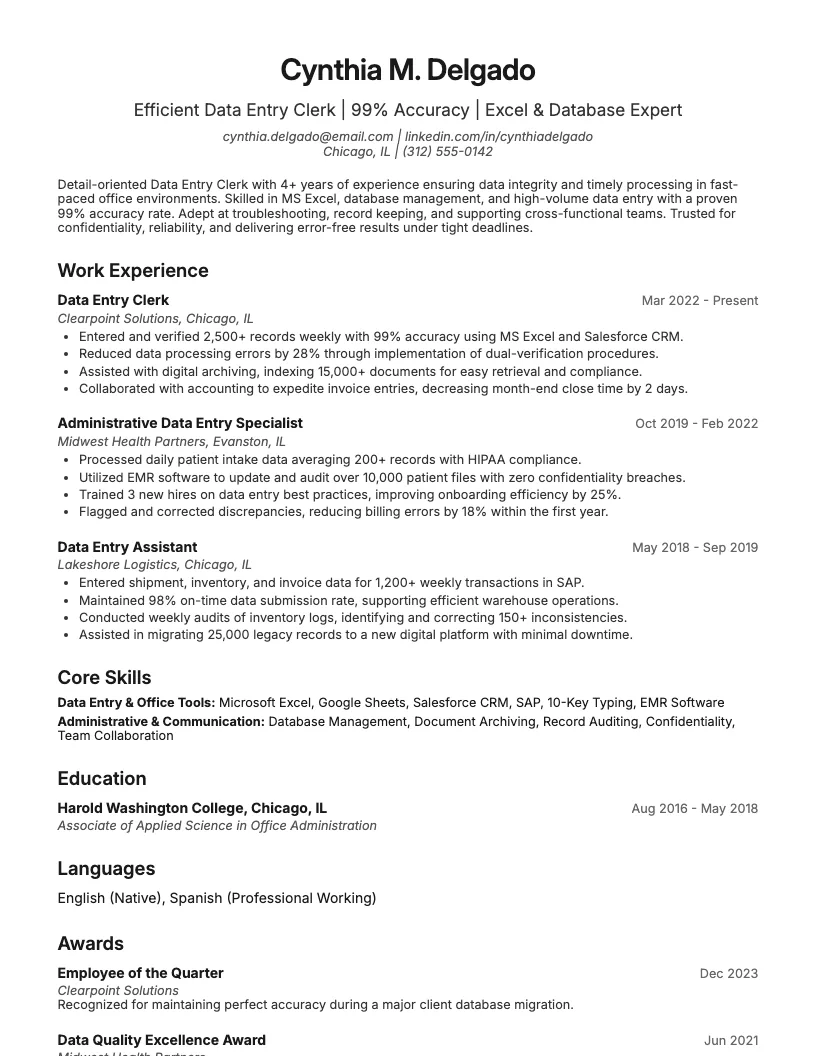 Click to enlarge
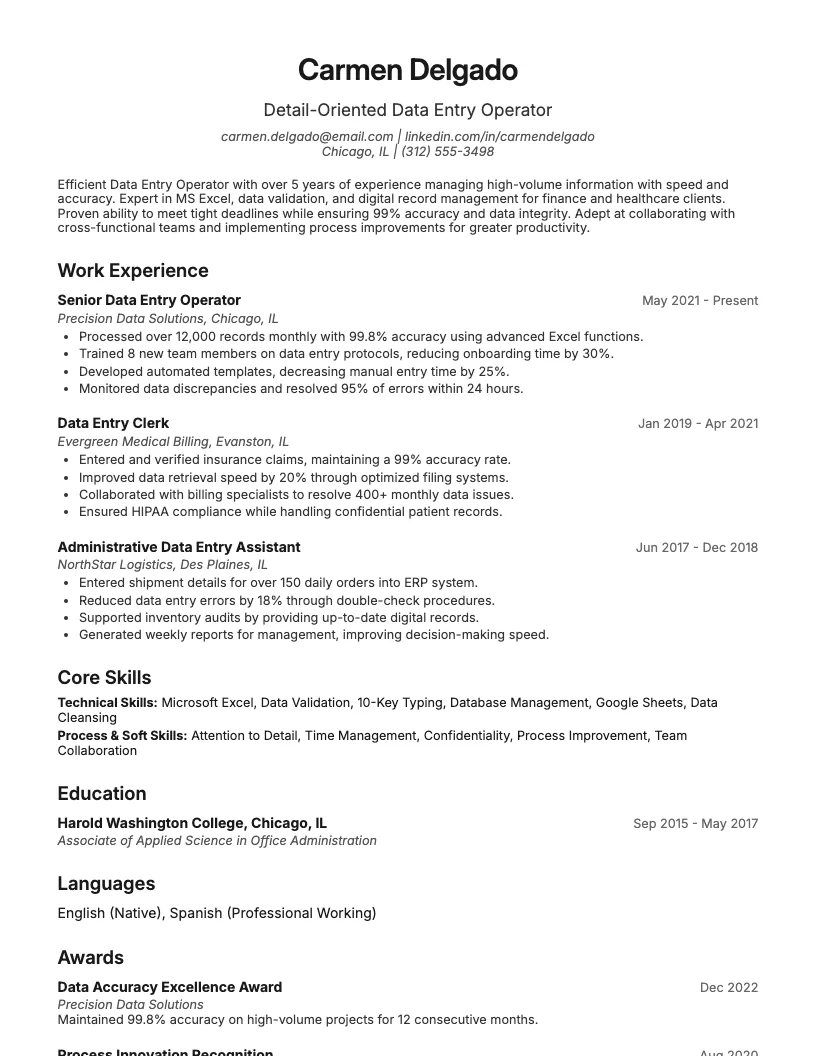 Click to preview

Get inspired by 65+ professional Data Entry Operator resume examples, each written by career experts and optimized to pass ATS scans. Pick a proven template, tailor it to your role, and download a polished resume in minutes.
Pick the specialization closest to your target role and start from a proven resume example.

Getting your data entry resume format right is key. A clean, organized layout makes it easy for recruiters to spot your skills and experience fast.
You want your resume to look professional and highlight your best qualities. Choosing the right structure can really help you stand out from other candidates.
When I format a data entry operator resume, I stick to a few crucial sections. These sections keep things organized and make your strengths easy to spot.
Start with contact information at the top-your name, phone, email, and location. This helps recruiters reach you quickly if they like what they see.
Add a short summary or objective next. Use this to explain your data entry focus and what you bring to the table, especially if you’re new to the field.
Include a skills section that lists your typing speed, accuracy, and software abilities. Numbers matter here-if you type 75+ WPM, say so.
Work experience comes next. List your past jobs, duties, and any measurable achievements. Even internships or volunteer gigs count if they’re relevant.
Wrap up with your education and certifications. Mention degrees, diplomas, or data entry certificates. This adds credibility and shows you meet basic requirements.
Recruiters want accuracy above everything. If you show a 99% error-free record, you stand out. Even a small mistake in data entry can cost companies time and money.
Speed matters, too. If you type 60+ words per minute with high accuracy, mention it. This helps recruiters see how you boost productivity.
You should also highlight your software skills. List tools you use-Excel, Google Sheets, or any data management system. Familiarity with these cuts down training time for employers.
Confidentiality is another big deal. If you handle sensitive data, say it. Recruiters need people they can trust with private info.
To wrap it up, recruiters like people who spot and fix problems. If you resolve duplicate entries or data discrepancies, mention that. This shows you add value beyond basic tasks.
Your resume summary or objective is the first thing recruiters check. It’s a quick way for you to highlight your skills and experience in data entry.
Pick a summary if you’ve got experience. Go with an objective if you’re just starting out or switching careers. Both help you stand out right away.
You want to keep things brief and to the point. In a few lines, show what you bring to the table and what you’re looking for next.
A resume summary is perfect if you’ve got some solid experience in data entry. You get to highlight your top skills and career wins right up front.
I usually focus on speed, accuracy, and any big achievements, like processing over 15,000 records per month or maintaining a 99% accuracy rate. This helps your value stand out.
You want to keep it short-just two or three sentences. Use numbers where you can and call out specific software, like Excel or Salesforce, to show your strengths.
If you’re just starting out or making a career switch, a resume objective helps you show your goals and the skills you want to bring to a data entry job.
I like to keep objectives short and focused-three or four sentences tops. Mention your keyboard speed, accuracy, and any software you know, like Excel or Google Sheets.
You can say something like: “Looking to use my 70 WPM typing speed and attention to detail in a data entry role. Eager to learn and support team goals.”
A clear, personal objective helps the recruiter see your motivation and potential. It’s your shot to make a confident first impression and set the tone for the rest of your resume.
Recruiters want to see clear proof of your results in past data entry jobs. Numbers, accuracy rates, and speed all matter way more than just listing your daily tasks.
If you’re not sure how to show your impact, don’t stress. I’ll break down how to quantify your work and give tips for handling this section, even if you’re just starting out.
Recruiters love numbers-they show what you actually achieve. I always highlight the volume of data I handle, like “processed 10,000+ records weekly.”
Show your accuracy rate and speed-such as “maintain 99% data accuracy” or “enter 75 invoices per hour.” This helps the hiring manager see your real value.
Don’t just list software. Mention how you use it-“created Excel reports that reduced errors by 25%.” Specific numbers make your experience stand out every time.
If you don’t have direct experience, highlight transferable skills like fast typing, attention to detail, or software familiarity-think Excel or Google Sheets.
Add school projects, internships, or volunteer work where you handled any kind of data. Even managing club spreadsheets or organizing events counts.
Include a short, clear objective at the top. Mention your interest in data entry and your eagerness to learn on the job. This helps recruiters see your motivation.
Focus on numbers. If you type 60+ words per minute or handled 1,000+ records in a semester, mention it. This gives your resume real impact.
It’s totally normal to start out without direct experience. You just need to show you’re motivated and ready to pick up new skills.
Hiring managers look for specific skills when they scan data entry resumes. Listing the right ones helps you stand out from other applicants.
Software skills matter, but soft skills count too. Both show you can handle the job’s demands. I’ll break down which ones matter most next.
When I build a data entry resume, I always start with hard skills. Recruiters want to see concrete abilities, not just personality traits or buzzwords.
You should list your software proficiency up front. Skills like Microsoft Excel, Google Sheets, and specialized data entry software matter a lot to hiring managers.
Database management is another big one. If you know how to use CRMs or tools like Oracle and QuickBooks, make that clear in your resume and cover letter. It shows you can handle real company data.
Attention to detail is huge in data entry. I double-check my work and catch errors fast-accuracy rates of over 99% are common for top candidates.
Good communication saves time. You’ll need to clarify instructions and ask quick questions, especially when processing high volumes of data or working with remote teams.
Being organized really matters. I keep track of deadlines and prioritize tasks, which helps me meet quotas and reduce stress. These soft skills make you stand out to recruiters.
Most data entry jobs ask for a high school diploma or GED. That’s your baseline. If you have more, it can really boost your resume.
Certifications and extra courses can show you’re serious about data management. Employers notice when you keep your skills updated.
If you want to stand out, listing your most relevant education and training is key. Let’s look at which certifications actually matter for data entry.
Adding certifications like the Certified Data Entry Professional (CDEP) or Microsoft Office Specialist (MOS) shows recruiters you’ve got hands-on skills with common tools.
If you go for something like the Certified Information Processing Professional (CIPP) or Certified Administrative Professional (CAP), you prove you understand data handling and office operations.
You don’t need every certification out there-pick two or three that match the job description. This helps your resume stand out without looking cluttered.
You already have your work history and education down. Now, let’s talk about extra sections that really help your resume stand out.
Adding the right details can show off skills that don’t always fit under experience or education. These sections help hiring managers see what else you bring to the table.
You can highlight projects, training, languages, or even hobbies. These details often make a difference, especially in jobs with lots of applicants.
Data entry jobs cover a lot of roles, from entry-level operators to managers and specialists. Each position looks for something a little different on a resume.
I’ve pulled together examples for every stage-whether you’re just starting or you’ve got years of experience. These real-world samples show what actually works in today’s job market.
If you’re just starting out, your entry-level data entry operator resume needs to focus on accuracy, speed, and attention to detail. Employers look for 98%+ accuracy rates.
Highlight your typing speed. Most entry-level roles want at least 40-50 WPM. List any experience with Microsoft Excel, Google Sheets, or data management platforms. This shows you’re ready to jump in.
Don’t forget to include soft skills like time management and organization. Reliable candidates stand out, even with limited experience. You can also mention school projects or internships that involve data, and reinforce your skills in your cover letter.
If you’re aiming for a data entry manager job, your resume needs to highlight both leadership and technical skills. I focus on accuracy, team management, and workflow optimization.
You want to show how you handle large teams-sometimes up to 20+ people-and manage data for thousands of records daily. Use metrics to prove your impact and efficiency.
I always suggest listing experience with staff training, quality control, and advanced data management tools. This helps recruiters see your readiness for management-level responsibilities.
If you’re aiming for a data entry supervisor role, your resume needs to highlight leadership. I always focus on team management, quality control, and workflow optimization.
You want to show concrete results, like reducing data errors by 30% or training teams of 10+ employees. This proves you actually improve productivity and accuracy.
Highlight your experience with software like Excel, Access, or ERP systems. Mention any process improvements or documentation updates you lead. This helps you stand out as a supervisor.
If you’re aiming for a Data Entry Associate role, you want to show off your accuracy and speed. Most employers look for 98%+ accuracy and typing speeds over 45 WPM.
Highlight your experience with database software and any work you’ve done with spreadsheets. This helps employers see you’re not just fast-you’re reliable and tech-savvy, too.
You can boost your resume by adding any quality control or data validation tasks you’ve handled. Employers love when you show you catch errors before anyone else does.
A data entry operator role usually involves entering or updating information with speed and accuracy. I focus on details, typing at least 50-60 words per minute without errors.
You want to highlight your skills with software like Microsoft Excel and database management systems. Recruiters like to see experience with high-volume tasks and meeting daily quotas.
List your achievements in numbers-like reducing input errors by 20% or processing over 1,000 records per day. This shows you keep up with demanding workloads and tight deadlines.
I see data entry clerk resumes focus a lot on accuracy and speed. Most companies expect at least 98% accuracy and can ask for typing speeds over 50 words per minute.
Showcase your software skills. Mention tools like Microsoft Excel, Google Sheets, or any company-specific database systems—this helps you stand out when applying for clerk roles, especially when paired with a strong cover letter.
Quantify your work. If you process 2,000+ records a day or handle sensitive information, put that on your resume. Recruiters like real numbers and clear impact.
If you're looking for data entry specialist resume examples, you want resumes that show strong accuracy and speed. I always highlight error rates below 1% and typing speeds over 60 WPM.
Showcase your advanced skills in Excel, CRM software, or database management systems. This helps recruiters see you as a specialist, not just an operator. Certifications also give you a leg up.
Always add achievements with numbers-like processing 5,000+ records weekly or maintaining 99% data integrity. This proves your impact and dedication in a fast-paced environment.
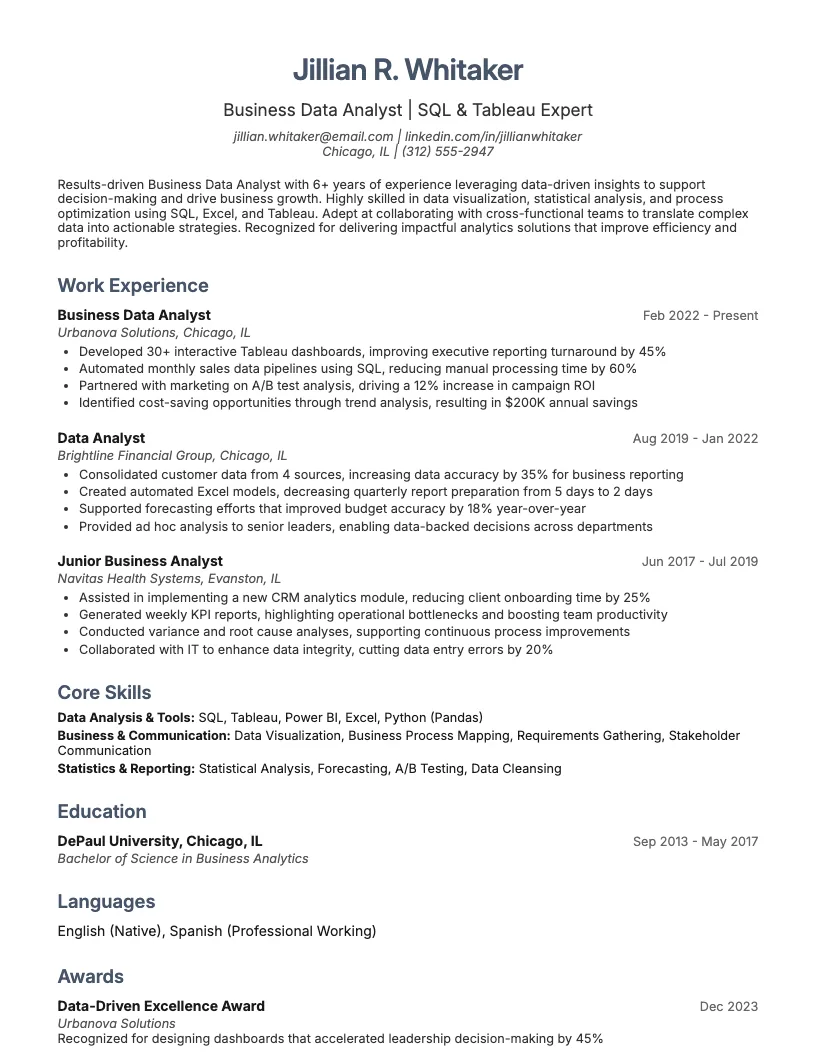
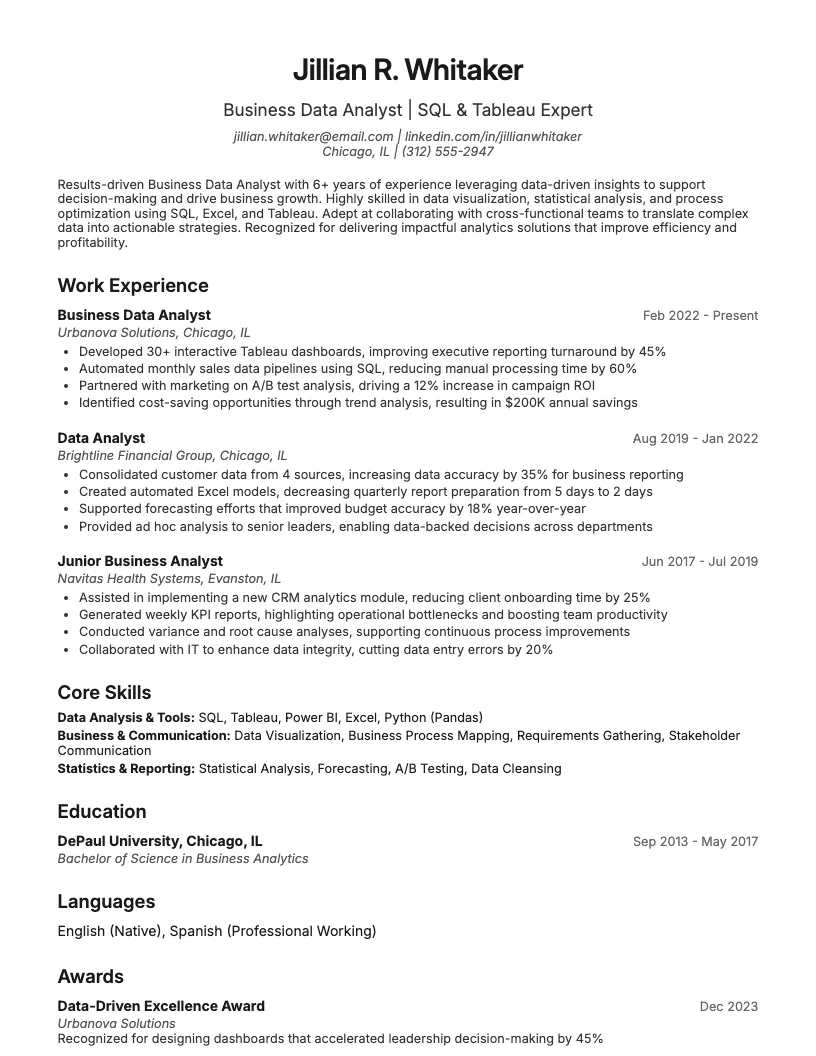
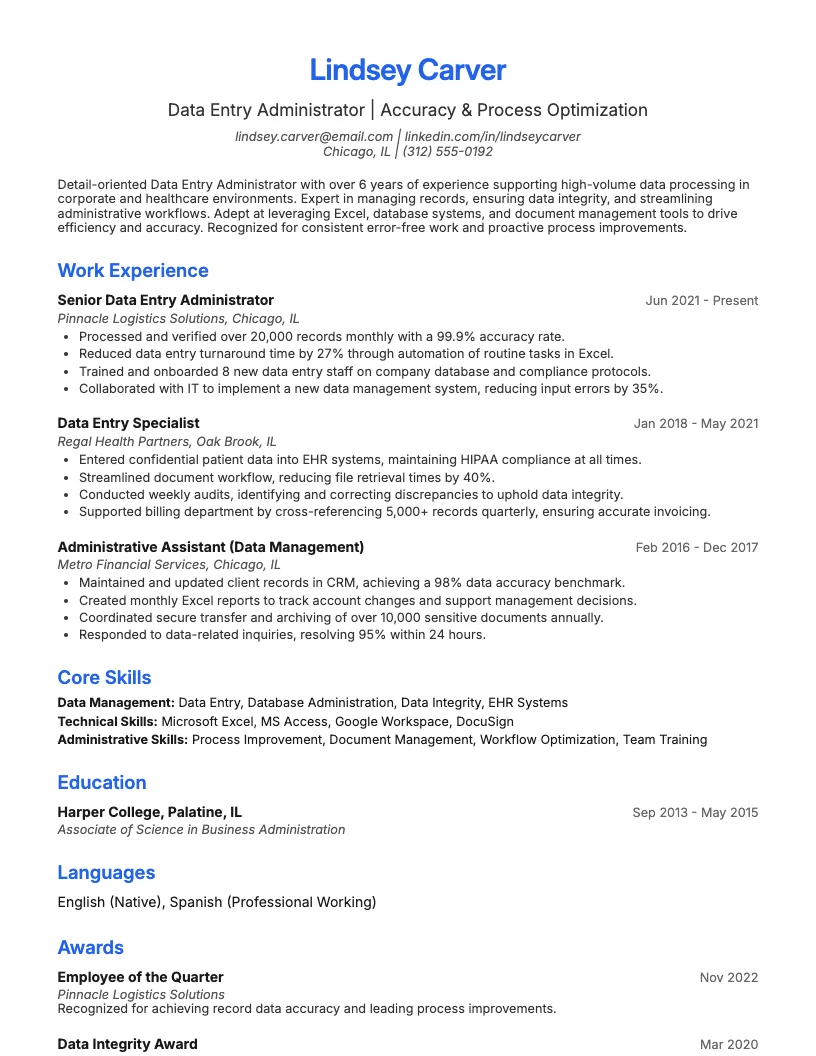
Looking for a real data entry resume sample? I’ve got you covered. Here’s how a polished resume highlights your typing speed, attention to detail, and tech skills-all in a few lines.
Use bullet points to show your impact. List the number of records managed or your average error rate. This helps recruiters see your value right away.
Remember, every data entry resume sample should include software you use, like Excel or Salesforce. That’s what hiring managers scan for first. Keep it clean and easy to read.
That wraps up the top examples for every data entry role-use these insights to help your own resume stand out.
Your resume works best when it’s clear, organized, and highlights your key stats. Recruiters want to see your typing speed, accuracy, and how efficiently you handle data.
Focus on using real numbers to show results. Make sure your resume layout looks professional, and keep important sections like skills, experience, and certifications easy to spot.
Browse Data Entry Operator resume examples for related roles. Preview any example, open it in the builder, or read its full guide.
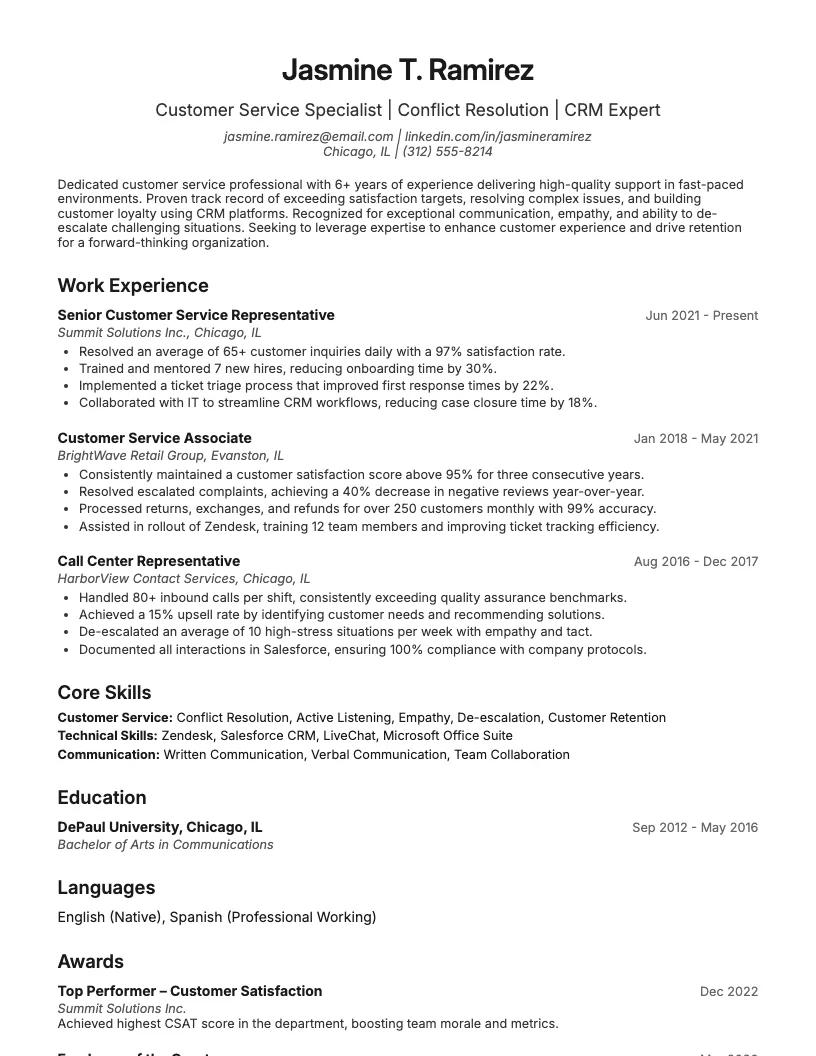
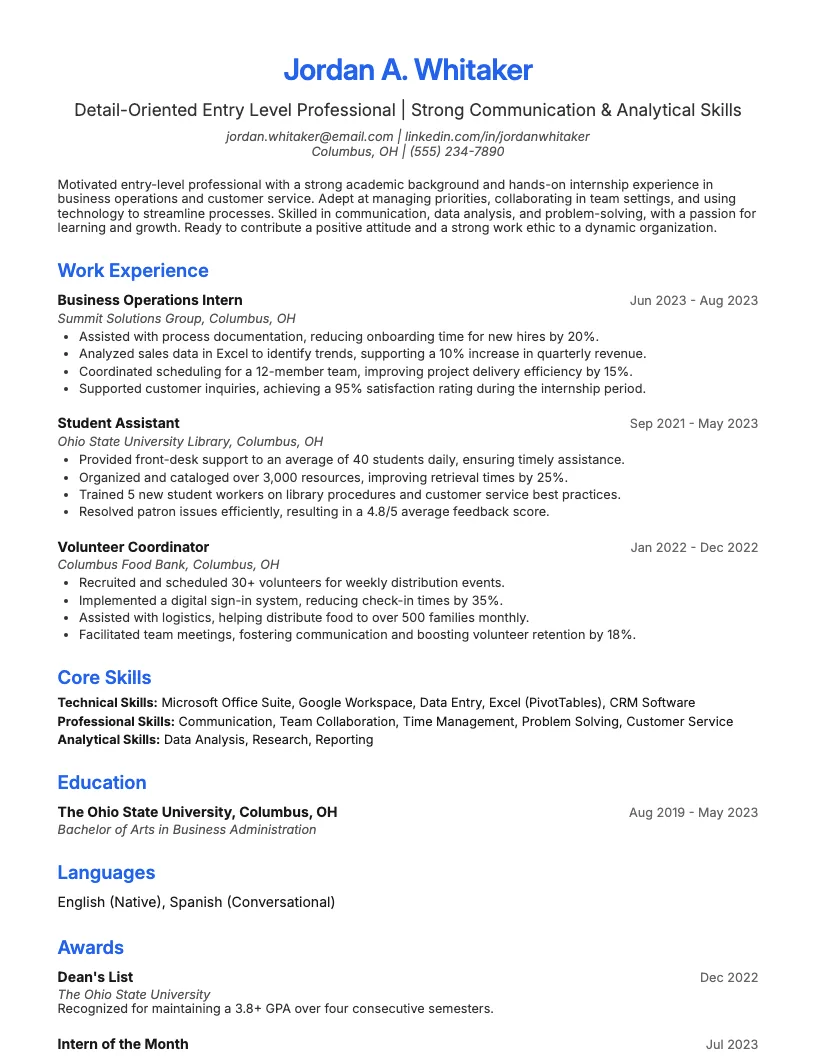
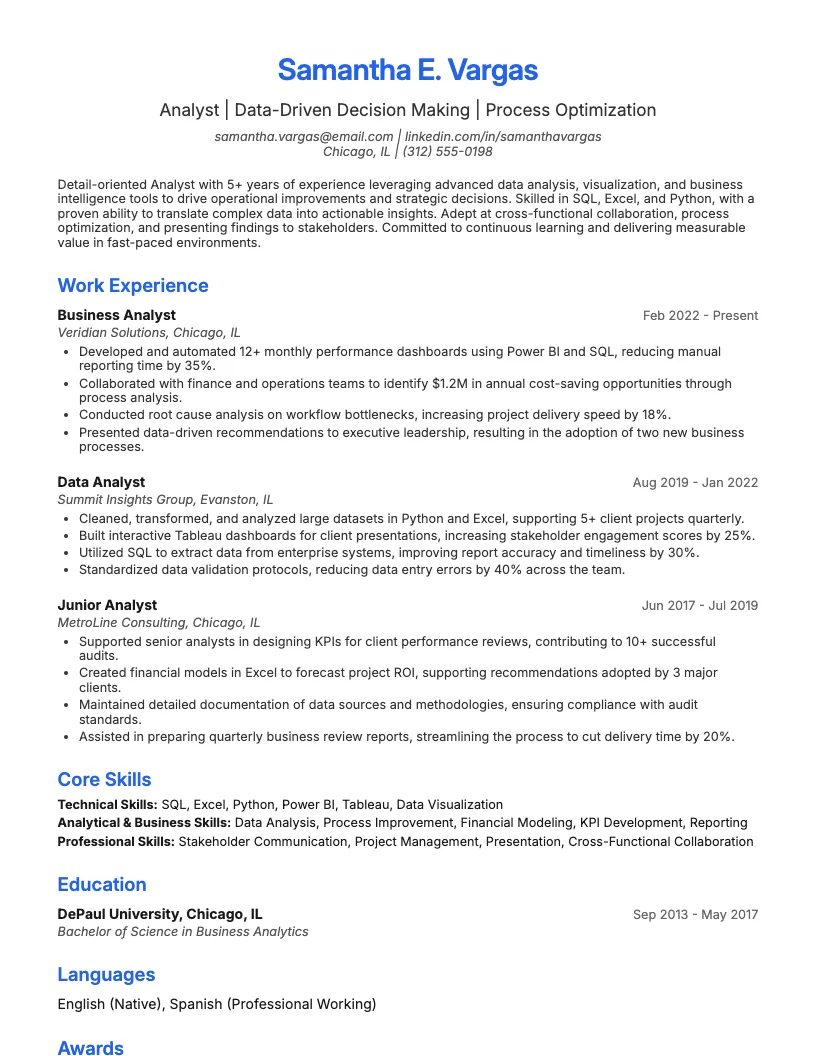
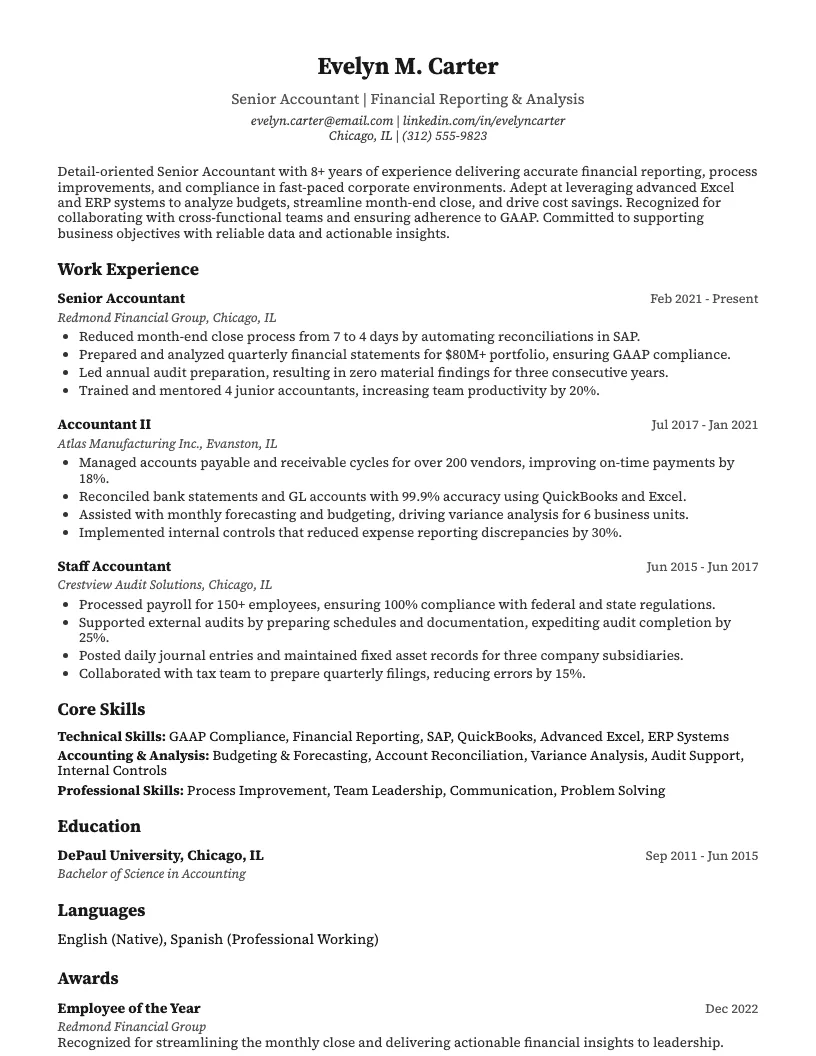
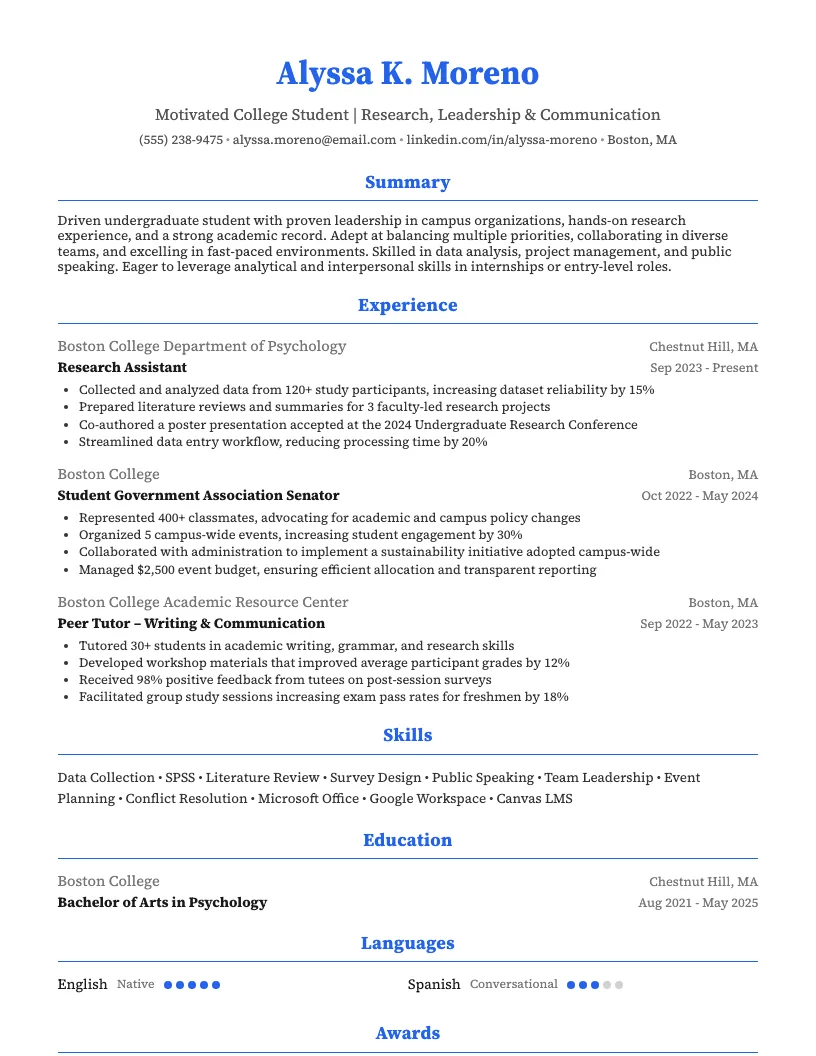
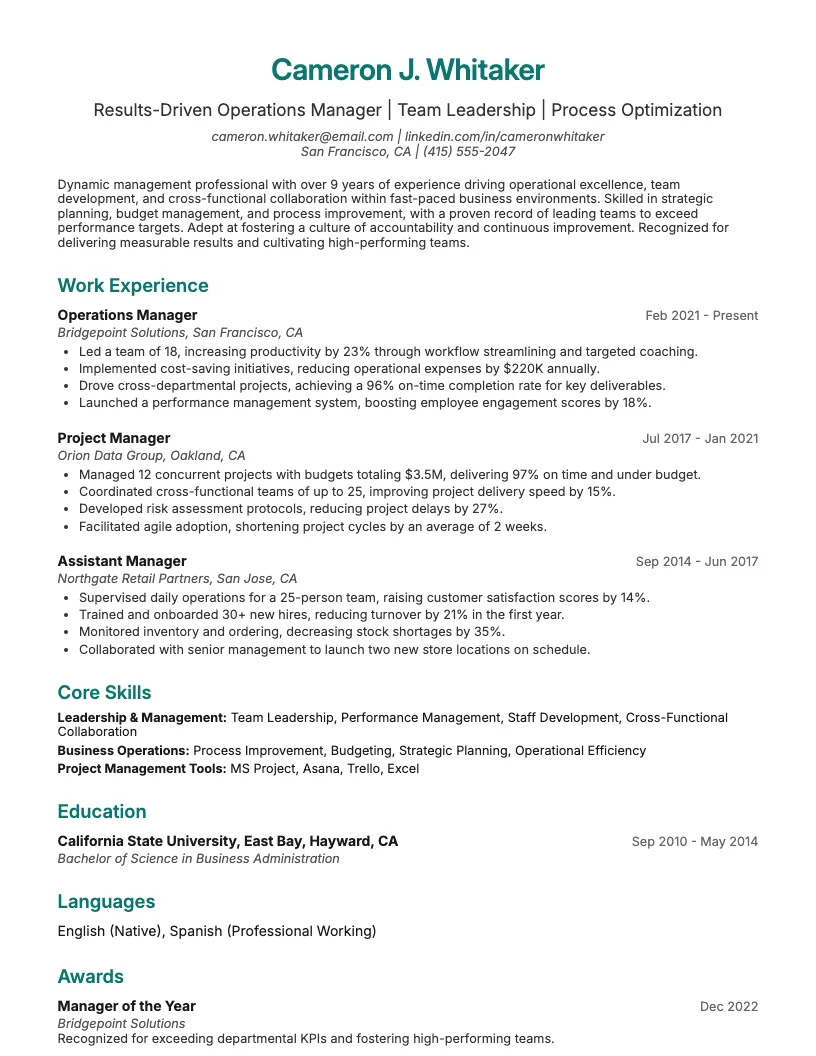
Click to enlarge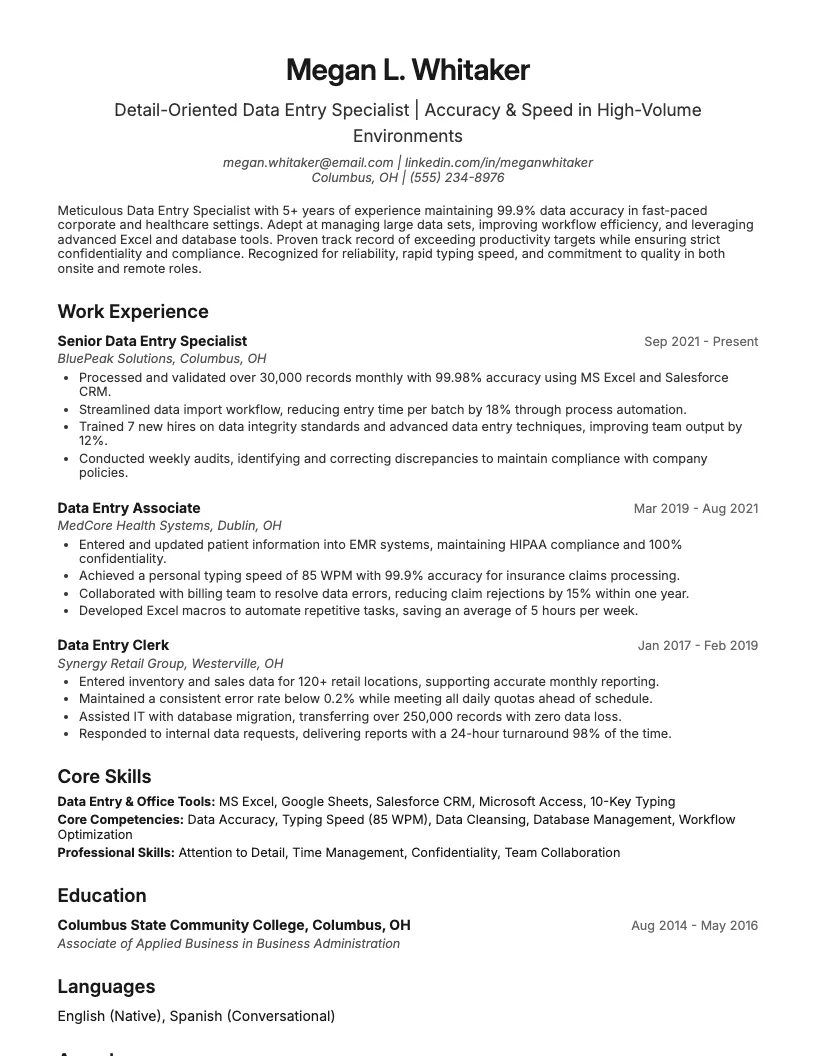 Click to enlarge
 Click to enlarge Click to enlarge Click to enlarge
 Click to enlarge
 Click to enlarge
 Click to enlarge Click to enlarge Click to enlarge
Common questions about Data Entry Operator resumes
A data entry operator resume template is a pre-designed layout tailored for showcasing skills like typing speed, accuracy, and software proficiency. ResumeJudge offers templates that highlight these key abilities.
Yes, most data entry operator resume templates from ResumeJudge are ATS-friendly, ensuring your resume passes automated screenings used by employers in industries like healthcare and finance.
Use a data entry operator resume template when applying for roles in fields like administration, logistics, or retail that require strong data management. ResumeJudge helps you tailor your resume to each industry.
Absolutely! ResumeJudge templates are easy to customize, letting you add your unique skills, certifications, and work history to fit specific job requirements or company needs.
Data entry operator templates focus on accuracy, speed, and technical skills, while other templates may emphasize leadership or creative abilities. ResumeJudge helps you choose the right emphasis for your goals.
A data entry operator resume should be one page for entry-level jobs and can extend to two pages for experienced professionals. ResumeJudge’s templates help keep your resume concise and relevant.
Yes, ResumeJudge templates include dedicated sections for certifications like Microsoft Excel or typing tests, making it easy to showcase your qualifications to employers.
Definitely! ResumeJudge templates help highlight your transferable skills, education, and any relevant training, making them perfect for newcomers to the field.
ResumeJudge offers templates in Word, PDF, and Google Docs formats, so you can edit and submit your resume easily across multiple job portals.
Yes, ResumeJudge’s templates include sections to highlight remote work skills, like time management and communication, which are valuable for remote data entry roles.
Explore more professional resume examples to inspire your job search
Use our AI-powered resume builder to create a professional, ATS-friendly resume in minutes.
Free to use • No credit card required